
Piracy off the coast of Somalia is once again a concern for international shipping in 2026. After years of declining attacks, Somali pirate groups have resumed hijackings near the Horn of Africa and the Gulf of Aden. These incidents threaten seafarers, disrupt commercial shipping, and raise concerns about maritime security.
The International Maritime Bureau (IMB) reported 51 piracy and armed robbery incidents worldwide between January and September 2026. Eight vessel hijackings during this period were attributed to Somali pirates. This shows that although global incidents have declined, piracy remains a serious regional problem. Source: IMB.
What Is Piracy Off the Coast of Somalia?
Piracy off the coast of Somalia involves attacks, attempted boardings and hijackings of vessels near Somalia and in nearby international waters. Pirate groups have historically targeted cargo ships, tankers and fishing vessels, often holding crews for ransom.
The Gulf of Aden and western Indian Ocean are particularly important because they connect major shipping routes between Asia, Africa, the Middle East and Europe.
Piracy differs from armed robbery against ships, which generally occurs within a country’s territorial waters. Both threaten maritime safety and can cause significant financial losses.
Why Did Somali Piracy Become a Major Problem?
Several factors contributed to the growth of Somali piracy during the 2000s.
- Weak governance: Political instability and limited coastal enforcement made it difficult to prevent attacks.
- Economic hardship: Limited employment opportunities left some coastal communities vulnerable to recruitment by criminal groups.
- Illegal fishing: Disputes over marine resources contributed to local grievances, although they do not justify piracy.
- Organized crime: Financiers, recruiters and ransom negotiators helped pirate groups coordinate their activities.
These factors explain why Somali piracy became more than a series of isolated attacks and developed into an organized criminal enterprise.
ARTICAL: The Duskbloods: Release Date, Gameplay, Latest News and What to Expect
Somali Pirates and the Gulf of Aden
The Gulf of Aden lies between Somalia and Yemen and connects the Indian Ocean with the Red Sea and the route toward the Suez Canal.
Its strategic location makes it important for international trade. Commercial ships carrying fuel, food and manufactured goods travel through the wider region.
Somali pirates have historically targeted vessels in these waters and extended their operations into the western Indian Ocean. Hijackings can threaten crew members, increase insurance costs and create delays for shipping companies.
Piracy should not be confused with attacks connected to regional conflicts, as different incidents can involve different perpetrators and motives.
History of Somali Piracy: From Peak to Decline
Somali piracy reached particularly high levels around 2009–2011. During this period, pirate groups hijacked commercial vessels and demanded ransom payments, creating serious risks for seafarers and shipping companies.
International naval patrols, stronger ship security, crew training and cooperation between governments helped reduce successful hijackings after the peak years.
However, the decline did not eliminate every criminal network or resolve the underlying economic and governance challenges. The renewed attacks in 2026 demonstrate why continued maritime security efforts remain necessary.
Latest Somali Piracy News in 2026
Recent hijackings have brought Somali piracy back into international focus.
The fuel tanker Honour 25 was hijacked in April 2026. During an operation to recover the vessel in September, five seafarers were killed, according to reports from maritime authorities.
Other vessels, including Sward, Eureka and Sibu 1, were also tracked in piracy-related cases during 2026. In an October 16 update, EUNAVFOR Operation ATALANTA reported that cases involving these vessels and Honour 25 had been closed, while the case involving Asana remained open.
The status of hijacked ships and their crews can change quickly. For current updates, consult the International Maritime Organization and International Maritime Bureau.
Why Is Somali Piracy Increasing Again?
The renewed activity may be linked to several factors.
Persistent criminal networks: Some groups may retain the contacts and resources needed to organize new attacks.
Changing maritime security: Naval forces must respond to multiple regional threats, and changes in patrol coverage can affect deterrence.
Economic and governance challenges: Limited employment and weak coastal enforcement can create opportunities for criminal organizations.
These factors do not explain every incident, but they highlight why piracy prevention requires both effective security and long-term improvements in coastal governance.
How Does Somali Piracy Affect Global Shipping?
Piracy creates economic and humanitarian problems beyond the ships directly attacked.
- Higher costs: Shipping companies may face additional insurance, security and fuel expenses.
- Trade disruptions: Hijackings and security warnings can delay deliveries and complicate route planning.
- Crew safety: Seafarers may experience violence, captivity and prolonged separation from their families.
- Local economic damage: Piracy can undermine legitimate fishing, maritime employment and investment in coastal communities.
Because the Gulf of Aden supports important international trade routes, maritime insecurity can affect businesses and shipping operations far beyond Somalia.
How Can Somali Piracy Be Prevented?
Preventing piracy requires coordinated action at sea and on land.
International naval patrols and information sharing can help authorities respond to suspicious activity. Shipping companies can strengthen onboard security, train crews and follow official maritime guidance.
Governments must also investigate criminal financing and ransom networks. At the same time, better employment opportunities, sustainable fishing and stronger coastal institutions can help reduce the conditions that criminal groups exploit.
The IMO supports regional cooperation through frameworks such as the Djibouti Code of Conduct and its Jeddah Amendment.
What Is the Future of Piracy Off Somalia?
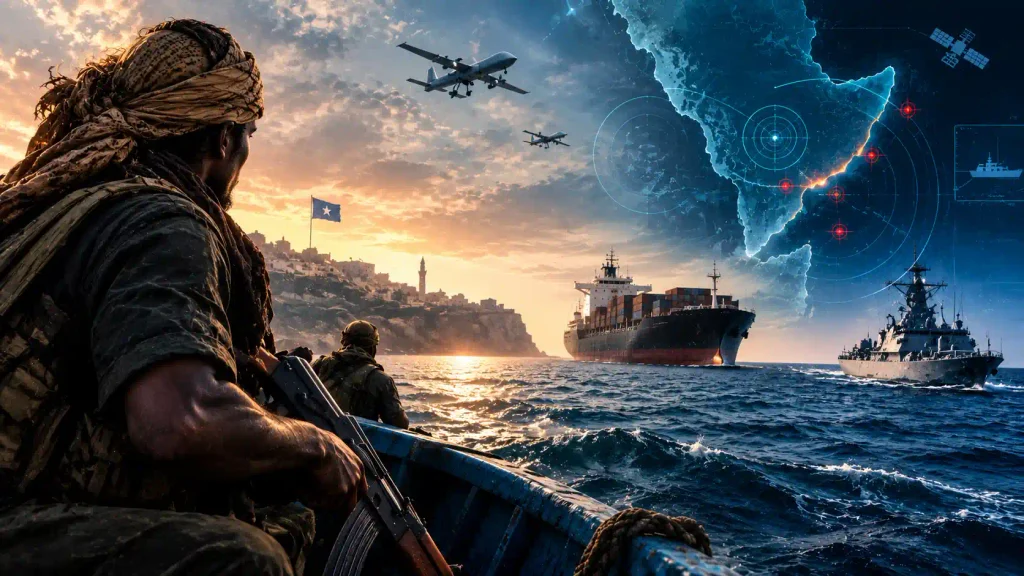
The future of Somali piracy depends on sustained international cooperation, effective law enforcement and improved conditions in coastal communities.
The resurgence in 2026 shows that years of reduced attacks do not necessarily mean the threat has disappeared. Continued surveillance, stronger ship protection and efforts to disrupt criminal networks will be important to preventing further hijackings.
Readers should follow official maritime reports for updates on new attacks, crew releases and changing security risks.
Frequently Asked Questions
Is there still piracy off the coast of Somalia?
Yes. Somali piracy remains a concern in 2026. The IMB reported eight vessel hijackings attributed to Somali pirates between January and September. Although activity remains below its historical peak, recent incidents demonstrate that ships and crews still face risks.
Is The Pirates of Somalia a true story?
The Pirates of Somalia is based on journalist Jay Bahadur’s reporting and experiences investigating Somali piracy. His work explores pirate networks, their motivations and the conditions surrounding their activities. Dramatic adaptations may change some details for storytelling purposes.
Is Captain Phillips a real story?
Yes. The 2013 film Captain Phillips, starring Tom Hanks, is based on the 2009 hijacking of the American cargo ship Maersk Alabama by Somali pirates. Captain Richard Phillips was taken hostage before being rescued by the U.S. Navy. Some scenes were dramatized for the film.
How did Somali piracy stop?
Somali piracy declined significantly after 2009–2011 because of international naval patrols, stronger ship security, armed guards on some vessels, and improved cooperation between governments and shipping companies. However, piracy was not eliminated, and renewed attacks in 2026 show that the threat remains.
Conclusion
Piracy off the coast of Somalia remains an important maritime security issue in 2026. Although international cooperation helped reduce attacks after the early 2010s, recent hijackings show that criminal networks can become active again.
Protecting commercial ships, safeguarding seafarers, disrupting pirate financing, and improving coastal economic opportunities are essential to reducing the threat. Reliable maritime reports remain the best way to follow the latest developments.
SOURCE: Wikipedia