
Rain is one of the most important natural processes on Earth. It supports agriculture, replenishes freshwater supplies, maintains ecosystems, and influences weather conditions around the world. From gentle showers to powerful rainstorms, rainfall affects how people live, travel, grow food, and prepare for changing weather.
Interest in rain often increases when weather conditions become unusual, heavy rainfall affects communities, or seasonal storms appear in the news. People also search for daily rain forecasts, expected precipitation, rainfall amounts, and information about upcoming weather conditions.
In 2026, global rainfall patterns have received additional attention because of the developing El Niño climate event. Scientists are monitoring how changing ocean temperatures and atmospheric conditions could influence precipitation, drought, and flooding in different regions.
Understanding rain means exploring more than how water falls from clouds. It also involves learning about rainfall measurements, rain accumulation, storm development, and the latest weather trends.
Why Is Rain a Major Weather Topic in 2026?
Rain has become an important subject in weather discussions because changing climate conditions can influence rainfall distribution across different parts of the world.
One major factor receiving attention in 2026 is El Niño, a natural climate pattern associated with warmer-than-average sea surface temperatures in the central and eastern tropical Pacific Ocean.
The World Meteorological Organization (WMO) reported in October 2026 that the current El Niño event could become exceptionally strong. Its influence may change normal rainfall and temperature patterns, increasing the risk of drought in some areas and heavy rainfall in others.
NASA has also monitored global precipitation during the 2026 El Niño period. Its satellite-based observations showed significant differences from normal rainfall patterns across several regions during July, August, and September.
These developments are important because rainfall does not change equally everywhere. Some countries may experience unusually dry conditions, while others receive excessive precipitation.
Other reasons rain continues to attract attention include:
- Extreme weather: Heavy rainfall and powerful storms can cause flooding and transportation problems.
- Seasonal changes: Monsoon systems influence rainfall across South Asia and other regions.
- Climate monitoring: Scientists study precipitation to understand changing weather patterns.
- Daily forecasts: People regularly check whether rain may affect their travel, work, or outdoor plans.
- Water availability: Rainfall influences agriculture, reservoirs, rivers, and groundwater supplies.
Understanding these developments helps readers connect everyday rainy weather with larger global climate patterns.
ARTICAL:Guy Ritchie: Best Movies, Career, Biography, and Latest News in 2026
What Is Rain and Why Does It Matter?
Rain is liquid precipitation that falls from clouds when water droplets become large enough to overcome rising air currents, and gravity pulls them toward the Earth’s surface.
It is a major part of the water cycle, which continuously moves water between the atmosphere, land, and oceans.
Rain supports life in several important ways. Plants need water to grow, farmers depend on precipitation for many crops, and rivers and lakes receive water through rainfall and surface runoff.
Rain also helps maintain soil moisture and supports forests, wetlands, and natural habitats.
The word precipitation has a broader scientific meaning. It includes different forms of water that fall from the atmosphere, such as:
- Rain, which consists of liquid water droplets.
- Snow, which forms from ice crystals.
- Drizzle, which contains very small water droplets.
- Sleet, which consists of small ice pellets.
- Hail, which develops inside strong storm clouds.
Therefore, all rain is precipitation, but not all precipitation is rain.
How Does Rain Form in the Atmosphere?
Rain forms through a natural process involving evaporation, condensation, and the growth of water droplets.
The sun provides energy that causes water from oceans, rivers, lakes, and other surfaces to evaporate. This water enters the atmosphere as invisible water vapor.
As moist air rises, it expands and cools. When it reaches a suitable temperature, water vapor condenses into tiny droplets or ice crystals, forming clouds.
Inside clouds, droplets collide and combine, gradually becoming larger. In colder clouds, ice crystals can also grow and contribute to precipitation.
When these particles become heavy enough, they fall toward the ground. If they pass through sufficiently warm air, they reach the surface as rain.
The process generally follows four stages:
- Evaporation: Heat changes liquid water into water vapor.
- Condensation: Cooling causes water vapor to form tiny droplets or ice crystals.
- Cloud development: Moisture gathers, and droplets grow inside clouds.
- Precipitation: Water falls toward the Earth’s surface as rain or another form of precipitation.
Not every cloud produces rain. Some clouds contain droplets that remain suspended because they are too small to fall through the surrounding air.
What Weather Conditions Cause Rain?
Several atmospheric conditions work together to produce rainfall. Moisture, temperature, air pressure, and rising air movement all play important roles.
Moisture in the atmosphere: Warm air can contain substantial water vapor, providing the moisture needed for cloud formation.
Rising air currents: When air rises, it expands and cools, encouraging condensation and cloud development.
Weather fronts: When warm and cold air masses meet, warmer air may rise above cooler air, producing clouds and rainfall.
Mountain barriers: Mountains force moist air upward. As the air cools, precipitation can develop on the windward side.
Low-pressure systems: These systems often encourage air to rise and can create widespread cloudy and rainy conditions.
These processes explain why rain can develop suddenly in one location while nearby areas remain dry.
What Are the Different Types of Rain?
Rainfall can occur in several forms depending on atmospheric conditions, cloud development, and the movement of air.
Light Rain and Drizzle
Light rain consists of relatively small amounts of water falling from clouds. It may continue for a short period or last several hours.
Drizzle contains even smaller droplets and is commonly associated with low clouds, mist, and overcast skies.
Moderate Rainfall
Moderate rain produces a steady amount of precipitation. It can improve soil moisture and replenish water supplies, although its effects depend on how long it continues.
Heavy Rainfall
Heavy rainfall occurs when a large amount of water falls within a relatively short period. It can reduce visibility, create dangerous road conditions, and overwhelm drainage systems.
Convective Rain
Convective rain develops when the sun heats the ground and causes warm, moist air to rise. This air cools and forms clouds that may produce sudden showers or thunderstorms.
Frontal Rain
Frontal rain occurs when different air masses meet. Warm air rises over colder air, producing clouds and potentially widespread rainfall.
Orographic Rain
Orographic rain develops when moist air moves toward a mountain range and is forced upward. Cooling causes condensation and rainfall, particularly on the windward side.
Each type of rain has different characteristics, which is why weather conditions can vary significantly between locations.
How Is Rainfall Measured?
Rainfall measures the amount of water that reaches the ground during a particular period. Meteorologists use this information to monitor weather conditions, evaluate water supplies, and identify possible flooding risks.
A rain gauge is a common instrument used to collect and measure precipitation.
Rainfall is generally recorded in:
- Millimeters (mm): Commonly used in most countries.
- Inches (in): Frequently used in the United States.
For example, 20 mm of rainfall means that the collected water would form a depth of 20 millimeters on a flat surface without losses from evaporation, runoff, or infiltration.
Rainfall measurements can be recorded hourly, daily, monthly, or annually. These records help scientists compare precipitation between different locations and seasons.
What Is Rain Accumulation and Why Is It Important?
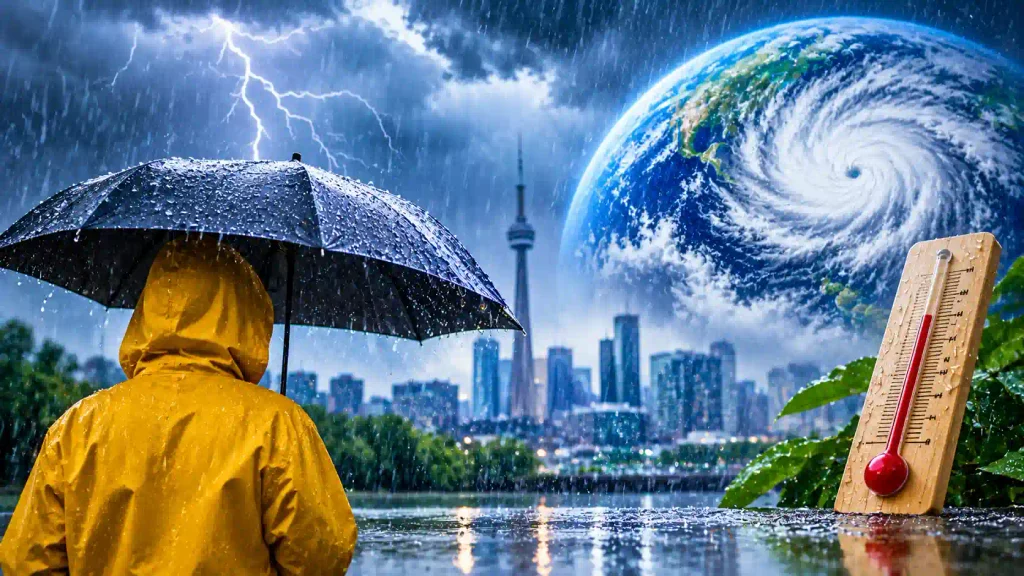
Rain accumulation refers to the total amount of precipitation collected over a selected period.
For example, if a location receives 6 mm of rain in the morning and another 9 mm in the afternoon, the total rain accumulation is 15 mm.
Weather experts monitor accumulation because the total amount of rainfall can influence flooding, soil moisture, and water availability.
It is also important to understand the difference between rainfall intensity and accumulation.
- Rain intensity: How quickly rain falls.
- Rain accumulation: The total amount of rain received.
- Hourly rainfall: Precipitation measured over one hour.
- Daily rainfall: Total precipitation recorded during a day.
A short but intense storm may create more immediate flooding concerns than light rain spread across several hours.
What Causes Heavy Rainstorms and Flooding?
Heavy rainstorms develop when atmospheric conditions provide enough moisture and rising air to produce substantial precipitation.
Several factors can contribute to intense rainfall:
- High humidity provides additional moisture for cloud formation.
- Thunderstorms create strong rising air currents and heavy showers.
- Slow-moving weather systems can produce prolonged rainfall over the same area.
- Monsoon winds transport moisture from oceans toward land.
- Tropical weather systems can bring extensive rain over large areas.
Heavy rainfall does not automatically cause flooding. The risk depends on rainfall intensity, soil conditions, local geography, river levels, and drainage capacity.
Flooding can occur when water accumulates faster than the ground, rivers, or drainage systems can handle it. Flash floods are particularly dangerous because water levels can rise rapidly.
How Does Rain Affect the Environment and Daily Life?
Rain has both positive and negative effects on the environment. Its impact depends on how much precipitation falls, how quickly it arrives, and the conditions of the surrounding area.
Benefits of Rain
Agriculture: Rain provides water that crops need for healthy growth and development.
Freshwater supplies: Precipitation replenishes rivers, lakes, reservoirs, and groundwater.
Natural ecosystems: Forests, wetlands, grasslands, and wildlife habitats depend on sufficient rainfall.
Soil moisture: Rain helps maintain moisture in the ground and supports plant growth.
Temperature regulation: Cloud cover and evaporation can influence local temperatures.
Negative Effects of Excessive Rain
Flooding: Heavy precipitation can overwhelm rivers and drainage systems.
Soil erosion: Fast-moving water can remove fertile topsoil.
Transportation disruption: Wet roads, poor visibility, and flooded streets can make travelling dangerous.
Agricultural damage: Excessive rainfall can waterlog fields and damage crops.
Infrastructure problems: Severe rainstorms can damage roads, buildings, and public services.
A balanced rainfall pattern is important because both drought and excessive precipitation can create serious environmental and economic problems.
Rainfall Patterns in Pakistan and the Monsoon Season
Rain plays an important role in Pakistan’s climate, particularly during the summer monsoon season. Seasonal precipitation supports agriculture, contributes to water supplies, and influences weather conditions across different provinces.
Pakistan generally receives significant monsoon rainfall between July and September. However, the amount varies considerably between northern, southern, and western regions.
According to Pakistan Meteorological Department data reported for the 2026 monsoon season, Pakistan received 120.5 mm of rainfall against a long-term normal of 149.2 mm between July 1 and September 30. This represented a national rainfall deficit of 19.3%.
Sindh experienced a particularly significant shortfall, receiving 71.1 mm compared with its normal average of 144.3 mm.
These figures demonstrate that rainfall can vary considerably between provinces, even during the same monsoon season.
Important factors influencing rainfall in Pakistan include:
- Seasonal monsoon winds bringing moisture into the country.
- Western weather systems producing rain during cooler months.
- Mountain ranges influencing the movement of moist air.
- Temperature differences affecting cloud development.
- Large-scale climate patterns influencing seasonal precipitation.
For the latest local weather updates, rainfall forecasts, and official warnings, readers can consult the Pakistan Meteorological Department.
How Do Meteorologists Forecast Rain?
Weather forecasting helps people understand when rain may occur, how much precipitation is expected, and whether severe weather conditions are approaching.
Meteorologists combine several technologies to monitor the atmosphere.
Weather radar: Detects precipitation and tracks the movement of rainstorms.
Weather satellites: Monitor cloud development, atmospheric moisture, and large-scale weather systems.
Rain gauges: Record actual rainfall amounts at ground-level observation stations.
Computer forecasting models: Analyze atmospheric measurements to estimate future temperature, wind, humidity, and precipitation.
These tools help weather agencies provide daily forecasts, rainfall estimates, and severe weather warnings.
Forecasts are not always exact. Rainfall can develop quickly, particularly during thunderstorms, so checking updated local weather information is important.
How to Stay Safe During Heavy Rain
Heavy rainfall can create hazardous conditions, especially in areas with poor drainage, rivers, and low-lying roads.
A few practical precautions can help reduce the risk:
- Check local weather forecasts before travelling.
- Avoid walking or driving through flooded roads.
- Keep drainage areas around your home clear.
- Stay away from rivers and streams during flooding.
- Secure outdoor objects before severe storms.
- Keep essential supplies and a flashlight available.
- Follow official weather warnings and emergency instructions.
Never assume that shallow floodwater is safe. Moving water can be strong enough to sweep away people and vehicles.
Frequently Asked Questions About Rain
Is It Going to Rain Today?
Whether it is going to rain today depends on your location and current atmospheric conditions. Check a local hourly weather forecast for precipitation chances, expected rainfall amounts, cloud cover, and possible thunderstorms. Weather conditions can differ between nearby areas, so location-specific forecasts are more useful than general weather reports.
Will It Rain Tomorrow?
Tomorrow’s weather depends on approaching weather systems, humidity, wind patterns, and atmospheric pressure. Meteorologists use weather models, radar, and satellite observations to estimate the possibility of precipitation. Checking an updated forecast can help you plan outdoor activities and travel.
Is It Going to Rain Tomorrow in My Area?
Rainfall forecasts are location-specific. One area may receive showers while another nearby location remains dry. Use a local weather service to check expected rainfall times, hourly precipitation chances, and any severe weather alerts for your area.
Will It Rain Today or Stay Sunny?
The weather may change throughout the day as clouds and atmospheric conditions develop. Some locations may experience sunshine in the morning followed by afternoon showers, while others may remain cloudy or dry. An hourly forecast provides a better understanding of changing weather conditions.
Have You Ever Seen the Rain?
“Have You Ever Seen the Rain?” is a well-known song by the American rock band Creedence Clearwater Revival. Written by John Fogerty and released in 1971, the song remains popular among music listeners. Although its title refers to rain, it is a musical reference rather than a scientific explanation of rainfall.
Final Thoughts
Rain is an essential part of Earth’s natural water cycle. It supports agriculture, replenishes freshwater resources, maintains ecosystems, and influences weather conditions across the world.
In 2026, changing global precipitation patterns and the developing El Niño event have made rainfall monitoring particularly important. NASA and international weather organizations continue to study these developments to improve climate understanding and support weather preparedness.
From understanding how rain forms to monitoring heavy rainfall and checking tomorrow’s forecast, reliable weather information helps people make better everyday decisions.
Whether it is a gentle shower, seasonal monsoon, or powerful rainstorm, rain remains one of the most important forces shaping life and the environment.
SOURCE: Wikipedia
One Response