
Colorado is one of the most popular states in the western United States, attracting attention for its Rocky Mountains, growing cities, outdoor recreation, tourism industry, and distinctive lifestyle. Located in the Mountain West region, Colorado offers a mix of natural landscapes, modern communities, historic destinations, and economic opportunities.
Known as the Centennial State, Colorado became the 38th US state in 1876. Its capital, Denver, is a major center for business, education, culture, professional sports, and tourism.
In 2026, Colorado is also attracting interest because of its 150th statehood anniversary, changing population patterns, tourism developments, wildfire concerns, and the outdoor recreation industry.
Whether you want to understand Colorado’s location, population, weather, economy, famous cities, or travel opportunities, this guide covers the essential information in one place.
Colorado at a Glance: Important State Facts
Colorado is known for its high elevations, mountain communities, and diverse geography. Here are some basic facts about the state.
| Category | Information |
| Official name | State of Colorado |
| Country | United States |
| Capital | Denver |
| Largest city | Denver |
| Nickname | The Centennial State |
| Statehood | August 1, 1876 |
| State number | 38th |
| Region | Mountain West |
| Population | 6,012,561 (July 2025 estimate) |
| Time zone | Mountain Time |
| Highest mountain | Mount Elbert |
| Highest elevation | 14,433 feet |
| Area | Approximately 104,094 square miles |
| Major mountain range | Rocky Mountains |
Colorado’s combination of mountain scenery, urban development, and outdoor opportunities makes it an important destination for residents and visitors.
ARTICAL: Sophie Cunningham: Age, Partner, WNBA Career, Height and Latest News (2026)
Where Is Colorado Located in the USA?
Colorado is located in the western-central United States, within the Mountain West region. It shares borders with Wyoming to the north, Nebraska and Kansas to the east, Oklahoma and New Mexico to the south, and Utah to the west.
Colorado also meets Arizona at the Four Corners, the location where four states share a common boundary.
The state has a distinctive rectangular shape and covers a large area of the Rocky Mountain region. Its geography includes high mountain peaks, forests, grasslands, plateaus, river valleys, and desert landscapes.
Denver sits along the eastern side of the Rocky Mountains, making it an important starting point for visitors exploring the state’s mountain destinations.
Colorado’s central location in the western United States also connects it to major transportation routes and neighboring states.
Colorado Population 2026: How Many People Live in Colorado?
Colorado has a population of more than six million residents. The latest official US Census Bureau state estimate available for this guide places the population at 6,012,561 as of July 1, 2025.
This marked an important milestone because Colorado crossed the six-million population mark during the first half of 2025.
Population growth continued, but the latest figures also revealed changes in migration patterns. Between July 2024 and June 2025, more domestic residents moved out of Colorado than moved in. However, international migration and natural population growth helped the state maintain an overall increase.
The Colorado population story is therefore more complicated than simply saying that everyone is moving into the state.
The Denver metropolitan area and Front Range communities remain important population centers. Areas such as Douglas, Larimer, and Weld counties have also experienced notable growth.
For updated figures, readers can consult the US Census Bureau and the Colorado State Demography Office.
Denver: The Capital and Largest City of Colorado
Denver is the capital of Colorado and its largest city. It is widely known as the Mile High City because its official elevation is approximately 5,280 feet above sea level.
The city plays an important role in Colorado’s economy, government, tourism, education, and entertainment industries.
Denver combines modern buildings and business districts with historic neighborhoods, museums, parks, restaurants, and cultural attractions.
Popular places to explore include:
- Union Station
- Colorado State Capitol
- Denver Art Museum
- Denver Botanic Gardens
- Denver Museum of Nature & Science
- Red Rocks Park and Amphitheatre
Denver is also home to major professional sports teams and serves as a transportation hub for people traveling to Colorado’s mountain towns and ski resorts.
Best Cities to Explore in Colorado
Colorado has several well-known cities, each offering different attractions, employment opportunities, and lifestyles.
Colorado Springs
Colorado Springs is located south of Denver and is famous for its mountain scenery, military installations, and outdoor attractions.
Garden of the Gods and Pikes Peak are among its most recognizable destinations. The city also offers parks, museums, restaurants, and family-friendly activities.
Boulder
Boulder is known for its university environment, technology companies, outdoor lifestyle, and beautiful mountain surroundings.
The city attracts students, professionals, hikers, and cyclists. The University of Colorado Boulder is one of its major institutions.
Aurora
Aurora is one of Colorado’s largest cities and an important part of the Denver metropolitan area.
It is known for its diverse communities, healthcare facilities, parks, shopping areas, and residential neighborhoods.
Fort Collins
Fort Collins is a northern Colorado city known for Colorado State University, historic downtown streets, local businesses, and recreational opportunities.
Its combination of education, employment, and outdoor activities makes it an attractive place for students and families.
Grand Junction
Grand Junction is located in western Colorado and offers a different landscape from the mountain communities near Denver.
It is famous for vineyards, red rock scenery, outdoor recreation, and access to Colorado National Monument.
Colorado Weather and Climate Throughout the Year
Colorado experiences four distinct seasons, although local weather varies considerably with elevation and geography.
The eastern plains, mountain communities, and western valleys can experience very different conditions on the same day.
Spring: Spring brings gradually warmer temperatures, but mountain snow can continue into the season. Sudden weather changes are common.
Summer: Summers are generally warm and sunny. Lower elevations can become hot, while mountain areas often remain cooler. Afternoon thunderstorms can occur, especially during the monsoon period.
Fall: September and October are popular for cooler temperatures and colorful autumn scenery. Aspen trees turn golden, attracting photographers and visitors.
Winter: Winter brings snow to many parts of Colorado, especially mountain regions. Skiing and snowboarding become major attractions, while lower elevations can experience a mixture of snow and mild weather.
Colorado Snowfall and Winter Conditions
Snow is an important part of Colorado’s climate and tourism economy. Mountain destinations depend on seasonal snowfall for skiing, snowboarding, and other winter activities.
However, snowfall is not consistent across the entire state. Higher elevations generally receive more snow than lower urban areas.
In 2026, below-average snowpack and early snowmelt became important environmental concerns because they contributed to drought conditions and increased wildfire danger.
Travelers should check local weather forecasts, mountain road conditions, and resort updates before visiting.
Colorado’s Rocky Mountains and Natural Geography
The Rocky Mountains are one of Colorado’s most recognizable natural features. They extend through much of the central and western parts of the state.
Colorado has numerous mountain peaks above 14,000 feet, commonly called fourteeners. Mount Elbert is the highest peak in the state, reaching 14,433 feet.
The Continental Divide also runs through Colorado. It separates major drainage systems and influences where water flows toward the Pacific Ocean or the Atlantic Ocean and Gulf of Mexico.
Other important geographical features include:
- Colorado River
- Arkansas River
- Rio Grande
- San Juan Mountains
- Front Range
- Great Plains
- Colorado Plateau
These natural features support hiking, wildlife habitats, water resources, agriculture, and outdoor tourism.
Best Places to Visit in Colorado
Colorado has four national parks, along with numerous state parks, historic communities, mountain resorts, and scenic destinations.
Rocky Mountain National Park
<AsyncImage query=” Rocky Mountain National Park Colorado alpine lake mountains landscape” aspectRatio=”16:9″ width=”100%”/>
Rocky Mountain National Park is one of the state’s most popular attractions. It features mountain peaks, alpine lakes, forests, wildlife, and extensive hiking trails.
Visitors can enjoy scenic drives, camping, photography, and wildlife watching. Trail Ridge Road is especially famous for its high-altitude mountain views, although access depends on seasonal conditions.
Garden of the Gods
<AsyncImage query=”Garden of the Gods Colorado red sandstone rock formations Pikes Peak” aspectRatio=”16:9″ width=”100%”/>
Located in Colorado Springs, Garden of the Gods is famous for its enormous red sandstone formations.
The park offers walking trails, mountain views, photography opportunities, and educational exhibits. It is a popular destination for families and outdoor enthusiasts.
Great Sand Dunes National Park
<AsyncImage query=”Great Sand Dunes National Park Colorado massive dunes mountains” aspectRatio=”16:9″ width=”100%”/>
Great Sand Dunes National Park and Preserve features impressive dunes surrounded by mountain scenery.
Visitors can enjoy hiking, sandboarding, photography, and stargazing. The contrast between the dunes and surrounding mountains makes it one of Colorado’s most distinctive landscapes.
Mesa Verde National Park
<AsyncImage query=”Mesa Verde National Park Colorado ancient Pueblo cliff dwellings” aspectRatio=”16:9″ width=”100%”/>
Mesa Verde National Park protects important archaeological sites and ancestral Puebloan cliff dwellings.
It offers visitors an opportunity to learn about the history, architecture, and cultural heritage of the communities that lived in the region centuries ago.
Black Canyon of the Gunnison National Park
<AsyncImage query=”Black Canyon of the Gunnison National Park Colorado dramatic deep canyon” aspectRatio=”16:9″ width=”100%”/>
Black Canyon of the Gunnison is known for its steep canyon walls, dramatic rock formations, and deep river gorge.
Scenic overlooks and hiking opportunities make it a popular destination for people interested in geology and natural landscapes.
Colorado Tourism Trends 2026: Visitor Numbers and Travel Industry
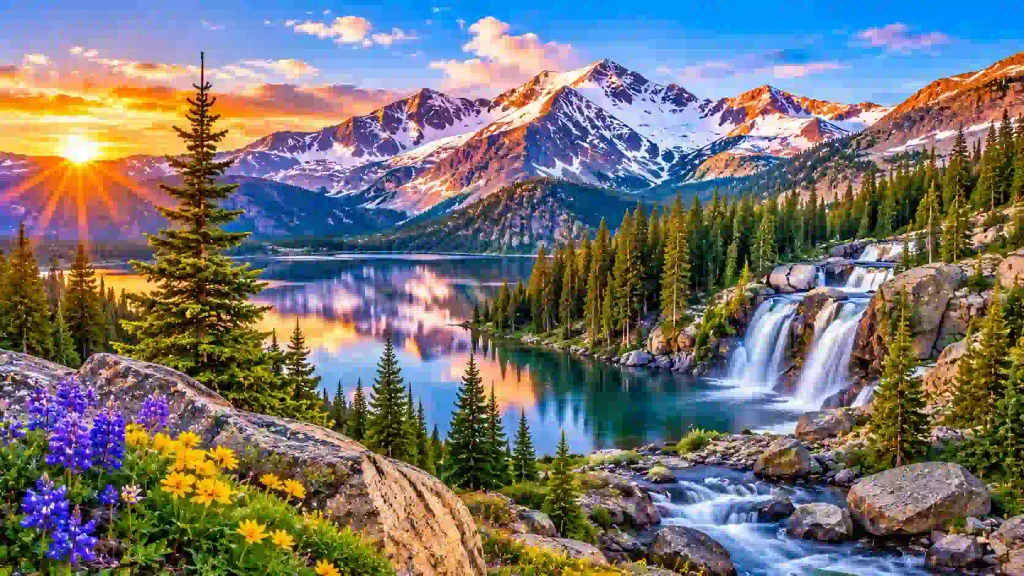
Tourism is one of Colorado’s important economic sectors. The state attracts visitors through its national parks, ski resorts, mountain communities, cultural attractions, and outdoor recreation.
According to the Colorado Tourism Office’s July 2026 announcement, Colorado welcomed approximately 96.8 million visitors in 2025, generating a record $29.2 billion in travel spending.
Tourism directly supported approximately 187,860 jobs across the state.
However, the latest tourism figures also show that growth is becoming more challenging. Visitor spending increased by around 2% in 2025, while weather conditions, wildfire concerns, and competition from other destinations affected some communities.
Denver and its surrounding metropolitan area remained the state’s largest tourism economy, accounting for approximately $14.2 billion in travel spending.
Outdoor recreation, entertainment, cultural attractions, and sporting events continue to attract visitors.
For 2026, important tourism interests include:
- Mountain and national park visits.
- Ski resorts and winter recreation.
- Fall foliage and scenic road trips.
- Outdoor festivals and recreation events.
- Historic towns and cultural destinations.
- Family vacations and wildlife experiences.
Travelers should plan according to seasonal weather, road access, park conditions, and local travel guidance.
Colorado Wildfires and Environmental Conditions in 2026
Wildfires have become an important topic in discussions about Colorado’s environment, public safety, and tourism.
In 2026, drought conditions, early snowmelt, hot weather, and strong winds contributed to elevated wildfire risks across parts of the western United States.
A September 2026 assessment from the Western Water Assessment reported that Colorado experienced approximately 318,399 acres burned by wildfires as of October 2, 2026, making it the state’s fifth-highest total since 1984.
The regional wildfire report also highlighted concerns about smoke, air quality, damaged structures, and post-fire flooding.
Wildfires can affect communities in several ways:
- Temporary road and park closures.
- Evacuation warnings and emergency restrictions.
- Poor air quality from smoke.
- Damage to homes, forests, and infrastructure.
- Reduced tourism activity in affected areas.
- Increased risk of flooding after fires.
Wildfire conditions change quickly, so historical seasonal statistics should not be treated as a live emergency update.
Anyone traveling or living in Colorado should monitor official information from Colorado Emergency Management and local authorities.
Colorado Economy, Industries and Employment
Colorado has a diverse economy supported by several major industries. Technology, aerospace, healthcare, education, tourism, construction, agriculture, and professional services all contribute to economic activity.
Denver is an important center for business, finance, transportation, and professional services. Boulder and Fort Collins have strong connections to education, research, and technology.
The aerospace sector also has a significant presence in Colorado, with businesses and institutions involved in satellite technology, defense, space research, and engineering.
Colorado Job Market in 2026
Employment conditions are an important consideration for people thinking about moving to Colorado.
According to the US Bureau of Labor Statistics, Colorado’s preliminary unemployment rate reached 4.1% in September 2026.
Education and health services, professional and business services, construction, and leisure and hospitality remain important employment sectors.
Job opportunities vary by city, industry, qualifications, and experience. People considering relocation should compare salaries with housing, transportation, healthcare, and other living costs.
Cost of Living in Colorado
Colorado offers different living environments, but affordability can be a challenge in some popular cities and mountain communities.
Housing is one of the biggest expenses, especially in Denver, Boulder, and resort destinations. Rent, home prices, transportation, insurance, utilities, and everyday shopping also affect household budgets.
Smaller cities and rural communities may offer different housing options, although employment opportunities and access to services can vary.
Before moving, compare:
- Average rent and home prices.
- Employment opportunities and salary levels.
- Transportation and commuting expenses.
- Healthcare and education access.
- Local taxes and household expenses.
- Distance from work and essential services.
There is no single cost-of-living figure that applies to everyone in Colorado. Expenses depend on household size, location, lifestyle, and housing choices.
Colorado Sports: Professional Teams and Popular Events
Sports are an important part of Colorado’s culture, especially in Denver and other major cities.
The state has several professional teams across major American sports leagues.
| Team | Sport | League |
| Denver Broncos | American football | NFL |
| Denver Nuggets | Basketball | NBA |
| Colorado Avalanche | Ice hockey | NHL |
| Colorado Rockies | Baseball | MLB |
| Colorado Rapids | Soccer | MLS |
| Denver Pioneers | College sports | NCAA |
The Denver Broncos play at Empower Field at Mile High, while the Denver Nuggets and Colorado Avalanche share Ball Arena.
Colorado also has a strong outdoor sports culture. Skiing, snowboarding, cycling, hiking, mountain biking, and trail running attract participants throughout the year.
Professional sports, college competitions, and outdoor events help make Colorado an appealing destination for sports fans.
Colorado’s 150th Anniversary in 2026
One of the important historical milestones in 2026 is Colorado’s 150th anniversary of statehood.
Colorado officially became the 38th state on August 1, 1876. Because this happened 100 years after the Declaration of Independence, the state received its famous Centennial State nickname.
The 2026 anniversary provides an opportunity to highlight Colorado’s history, cultural heritage, communities, and development.
Its history includes Indigenous communities, early exploration, mining settlements, railroad development, agriculture, and the growth of modern cities.
The anniversary also brings renewed attention to historic sites, museums, local celebrations, and the stories that shaped the state.
Education and Universities in Colorado
Colorado has a wide range of educational institutions, including public universities, private colleges, community colleges, and research centers.
Some of its best-known institutions include:
- University of Colorado Boulder.
- Colorado State University.
- University of Denver.
- Colorado School of Mines.
- University of Colorado Colorado Springs.
These institutions offer programs in engineering, business, science, healthcare, technology, arts, and other academic fields.
Colorado’s universities also contribute to research, innovation, and workforce development.
Best Time to Visit Colorado
The best time to visit Colorado depends on your interests and preferred activities.
Summer (June to August): Suitable for hiking, camping, mountain sightseeing, and national park visits.
Fall (September to October): Popular for golden aspen trees, cooler temperatures, photography, and scenic drives.
Winter (December to February): Ideal for skiing, snowboarding, and winter mountain experiences.
Spring (March to May): A good time to explore lower-elevation cities and attractions, although mountain weather can remain unpredictable.
Visitors should check seasonal park schedules, snow conditions, road closures, and local forecasts before arranging their trips.
Interesting Facts About Colorado
Here are some additional facts that help explain what makes Colorado unique:
- Colorado became the 38th US state on August 1, 1876.
- Its nickname is the Centennial State.
- Denver is known as the Mile High City.
- Mount Elbert is the highest mountain in Colorado.
- The state has four national parks.
- Colorado contains numerous mountains higher than 14,000 feet.
- The Rocky Mountains attract visitors throughout the year.
- Colorado is home to the famous Garden of the Gods.
- Great Sand Dunes National Park features enormous dunes.
- The state celebrated its 150th anniversary of statehood in 2026.
- Colorado has professional teams in football, basketball, hockey, baseball, and soccer.
- Its economy includes technology, aerospace, tourism, agriculture, and healthcare.
Frequently Asked Questions About Colorado
What time is it in Colorado right now?
Colorado follows the Mountain Time Zone. During standard time, it uses Mountain Standard Time (MST), which is UTC−7. During daylight saving time, it switches to Mountain Daylight Time (MDT), which is UTC−6.
In November 2026, Colorado is observing Mountain Standard Time following the end of daylight saving time on November 1.
Is Colorado in the Mountain or Central Time Zone?
Colorado is in the Mountain Time Zone. Cities such as Denver, Boulder, Colorado Springs, and Fort Collins follow the same time zone.
Why is Colorado called the Centennial State?
Colorado received this nickname because it became a US state in 1876, exactly 100 years after the Declaration of Independence was signed in 1776.
How many national parks are in Colorado?
Colorado has four national parks: Rocky Mountain National Park, Mesa Verde National Park, Great Sand Dunes National Park and Preserve, and Black Canyon of the Gunnison National Park.
What is the highest point in Colorado?
Mount Elbert is the highest point in Colorado. It reaches approximately 14,433 feet above sea level and is located in the Sawatch Range of the Rocky Mountains.
Is Colorado a good state for outdoor activities?
Yes. Colorado offers extensive opportunities for hiking, skiing, snowboarding, camping, cycling, fishing, and mountain recreation. Its national parks and public lands attract outdoor enthusiasts throughout the year.
What states are closest to Colorado?
Colorado shares borders with Wyoming, Nebraska, Kansas, Oklahoma, New Mexico, Utah, and Arizona. Arizona meets Colorado at the Four Corners.
What is Colorado known for besides mountains?
Colorado is also known for Denver, professional sports, universities, aerospace businesses, historic mining towns, cultural attractions, national parks, and a strong outdoor recreation industry.
Is Colorado a good place to live?
Colorado can be an attractive place to live because of its outdoor lifestyle, employment opportunities, education, and natural scenery. However, housing affordability, transportation, and living expenses should be considered before relocating.
Final Thoughts
Colorado is much more than a state known for mountains and skiing. It combines major cities, natural attractions, historic communities, educational institutions, professional sports, and a diverse economy.
Its population has crossed six million, tourism generated a record $29.2 billion in 2025, and its 150th statehood anniversary made 2026 an important year for the state.
At the same time, changing migration patterns, housing affordability, wildfire risks, and tourism challenges remain important issues.
Whether you are planning a visit, researching Colorado USA, exploring its cities, or considering a move, understanding its geography, climate, economy, and current developments provides a useful picture of life in the Centennial State.
SOURCE: Wikipedia
You May Also Like
 Uber Stock: Price, Forecast, Performance and 2026 Investment Outlook
 MS NOW Live: Breaking News, App, Shows and Latest 2026 Updates
 Linda Cardellini: Age, Height, Movies, TV Shows, Career and Latest News (2026)
 Sunrise: Today’s Sunrise Time, Tomorrow’s Forecast, Seasonal Changes and Facts
 Markets Today: US Stock Market News, Global Trends and Financial Updates
 Rain: Latest Weather Trends, Types, Causes, Rainfall and Forecasts