
Supreme Court Tariff Ruling Shakes Markets and
shapes U.S. Trade Debate
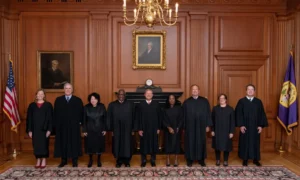
A chief’s best courtroom ruling on tariffs has brought about sturdy reactions across monetary markets, political circles, and global exchange partners, marking one of the largest traits in recent politics and economic policy debates. The cutting-edge ultimate court docket news facilities on whether presidential authority to impose sweeping alternate regulations under emergency powers—along with those tied to IEPA tariffs and Section 122 of the Exchange Act of 1974—has clear constitutional limits.
The closely watched Supreme Court decision on the tariff has already impacted the stock market today, with volatility recorded across major indexes, including the Dow Jones, Nasdaq, and S&P 500. Analysts say the Supreme Court tariff decision may reshape how future administrations deploy trade tools in times of economic pressure or national emergency.
Historical past of the tariff dispute
The legal warfare stems from demanding situations to Trump’s tariffs, which were imposed at some stage in his presidency, and the use of extensive govt powers. Critics argued that some of these tariffs exceeded authority granted underneath statutes like IEPA and the Segment 122 price lists, raising concerns about the separation of powers.
Supporters of the measures maintained that the government department has the flexibility to reply to international monetary threats quickly. But agencies, importers, and numerous states drove for judicial review, claiming the Supreme Court’s price lists framework needed clearer limits.
The dispute reached the state’s highest court docket after more than one decrease-supreme court docket ruling produced conflicting interpretations of federal alternate authority. The final SCOTUS tariff ruling now sets a national precedent.
What the court docket determined
In its selection, the supreme court clarified how emergency trade powers may be used. Even as the ruling did no longer take away all presidential tariff authority, it installed stricter necessities for justification, oversight, and duration.
Legal experts say the best court docket move to take down the tariffs narrative is partially correct—a few measures have been invalidated—however, the broader effect lies in defining prison standards and transferring them forward.
For the duration of arguments, distinguished legal professional Neal Katyal emphasized that unchecked tariff authority should create long-term economic uncertainty. Numerous preferred court justices raised comparable worries at some point of hearings.
Observers referred to the impact of constitutional interpretation amongst individuals of the bench, which includes Clarence Thomas, Neil Gorsuch, and Samuel Alito, who examined the boundaries of delegated congressional energy.
The final excellent Supreme Court choice on tariffs emphasizes that emergency economic authority has to be tied to clear legislative authorization and cannot be characterized as an indefinite policy tool.
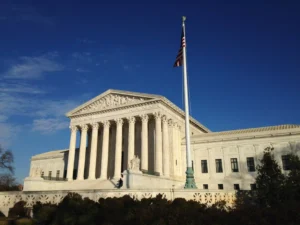
Marketplace response and economic effect
The inventory market reacted right away after the best courtroom tariff ruling became public. The Dow, S&P 500, and Nasdaq all experienced sharp swings as buyers evaluated the consequences for trade coverage balance.
Financial analysts performing on CNBC described the ruling as “structural,” which means it is able to reshape long-term expectations for worldwide commerce. Coverage from the Wall Street Magazine and the New York Times highlighted issues amongst exporters and multinational businesses.
Some market strategists consider decreased tariff uncertainty might also, in the end, aid global supply chains. Others warn that restricting executive flexibility ought to result in gradual rapid monetary responses during crises.
Investor and coverage commentator Scott Bessent mentioned that clearer legal rules may stabilize chance exams; however, short-time-period volatility is likely as businesses adjust.
Political reaction and trump reaction
The ruling quickly became a focal point in Trump’s information and ongoing election-season debate. Donald Trump addressed the selection throughout a Trump press conference today, arguing that sturdy trade enforcement remains crucial for defensive home industries.
In comments broadcast at some point of Trump’s stay in office, he defended Trump’s tariff policy as vital to counter unfair competition. His marketing campaign described the outcome as limiting government leverage in worldwide negotiations.
In the meantime, political warring parties say the superb courtroom ruling reinforces constitutional assessments on economic authority. The controversy over Trump’s tariffs and Supreme Court implications is expected to stay crucial to marketing campaign messaging.
Prison and financial evaluation
Specialists writing for SCOTUSblog say the decision will influence how future administrations interpret IEPA, Section 122, and associated exchange statutes. By way of clarifying requirements for emergency justification, the court docket correctly reshaped the felony framework behind tariff selection making.
Economists point out that tariffs—occasionally spelled “tarrifs” or “tarrif” in public statements—function as both financial gear and political indicators. Limiting their unilateral use could inspire more congressional involvement in the trade approach.
A few analysts additionally advise ability implications for kingdom refund disputes tied to previously collected responsibilities, although prison demanding situations on that front are nonetheless developing.

Broader implications for U.S. exchange policy
The lengthy time-period effect of this perfect courtroom tariff improvement should extend past any unmarried administration. supreme court Future leaders may also need to coordinate more intently with Congress before enforcing alternate wide regulations.
The selection also sends a message to global partners that U.S. tariff policy may additionally become extra predictable—even though perhaps slower to trade. Agencies dependent on imports are watching intently for regulatory guidance following the preferred courtroom ruling interpretation.
What comes next
Felony students count on additional litigation as agencies revise enforcement guidelines. The tariff information cycle will possibly be retained as policymakers debate a way to put in force the ruling.
For investors monitoring the DJIA nowadays or tracking global trade, the final result represents both a legal milestone and a practical shift in financial governance. The intersection of regulation, markets, and executive authority—highlighted by this ideally suited court docket ruling on price lists—guarantees the problem will remain in the middle of U.S. coverage discussions.
As economic markets digest the choice and political leaders reply, the outcomes of this landmark tariff ruling will preserve shaping trade, funding, and governance for years to come.