
Veterans are an important part of American history and society. They are men and women who have served in the United States Armed Forces, protecting the country and supporting military operations across different generations. Their contributions include wartime service, national defense, humanitarian missions, and other responsibilities that have shaped the nation’s history.
Interest in veterans is particularly high in November because of Veterans Day, an annual observance that recognizes former military service members. In 2026, the holiday takes place on Wednesday, November 11. Alongside the annual celebration, people are also looking for information about veterans’ benefits, VA healthcare, disability payments, military records, and support programs.
The subject also includes important historical questions, such as how many World War II veterans are still alive and how the United States supports former service members after they leave the military.
This guide explores the meaning of veterans, the latest 2026 information, military history, government assistance, and the resources available to veterans and their families.
Who Are Veterans in the United States?
A veteran is generally a person who previously served in the United States military and meets the applicable federal definition of veteran status. Qualifying service can include active military, naval, air, or space service, followed by a discharge or release under conditions other than dishonorable.
Veterans come from different generations and backgrounds. Some served during major conflicts such as World War II, the Korean War, and the Vietnam War. Others served during the Gulf War era or more recent military operations.
Importantly, combat experience is not required for every person to qualify as a veteran. Individuals who completed qualifying non-combat military service may also be recognized.
The United States has six military branches:
- US Army: Conducts land-based operations and protects national security.
- US Navy: Maintains maritime defense and supports naval missions.
- US Marine Corps: Provides specialized expeditionary and combat forces.
- US Air Force: Handles air defense, aviation, and related military operations.
- US Space Force: Focuses on space-based military capabilities and national security.
- US Coast Guard: Provides maritime security, search and rescue, and law enforcement.
According to the US Census Bureau’s November 2026 Veterans Day report, approximately 15.7 million military veterans lived in the country in 2025, representing 5.9% of the civilian population aged 18 and older.
ARTICAL: Tommy Lee Jones: Biography, Movies, Career, Wife, Children and Latest News (2026)
Veterans Day 2026: Why November 11 Is Important
Veterans Day is one of the most recognized military observances in the United States. It provides an opportunity for Americans to recognize former service members and appreciate their contributions to national security.
The holiday takes place every year on November 11, the date associated with the 1918 armistice that ended fighting in World War I.
Originally, the observance was called Armistice Day. It became a national holiday in 1938, and in 1954, President Dwight D. Eisenhower signed legislation officially changing its name to Veterans Day.
The new name expanded the holiday’s purpose to honor American veterans from all military generations, rather than focusing only on World War I.
In 2026, Veterans Day falls on Wednesday, November 11. Communities across the country recognize the occasion through:
- Veterans Day parades and public celebrations
- Ceremonies at military memorials
- Educational activities in schools
- Tributes to living and deceased service members
- Special programs organized by veterans’ organizations
- Military ceremonies at Arlington National Cemetery
One of the most important national traditions is the ceremony at the Tomb of the Unknown Soldier. It recognizes unidentified American service members who died while serving their country.
Veterans Day is also different from Memorial Day. Veterans Day recognizes all American military veterans, while Memorial Day primarily honors those who died during military service.
Latest Veterans News and Important Developments in 2026
Veterans remain an important subject in discussions about government assistance, military history, healthcare, employment, and retirement.
Several developments and statistics are particularly relevant to readers in November 2026.
The US Veteran Population
The US Census Bureau reported approximately 15.7 million veterans in the United States in 2025. Veterans accounted for 5.9% of the civilian population aged 18 and older.
The country’s veteran population has changed considerably over the decades. As older generations pass away, veterans from more recent military periods represent an increasingly important part of the community.
These demographic changes also influence discussions about healthcare, retirement services, housing, and long-term support.
Veterans Day 2026 Celebrations
Veterans Day 2026 will be observed nationwide on November 11. Federal agencies, military organizations, schools, and local communities use the occasion to recognize former service members.
Special attention is also given to veterans who served during major conflicts, including World War II.
Healthcare and Disability Assistance
Healthcare access and disability compensation continue to be major concerns for many former service members.
The Department of Veterans Affairs provides medical services and financial assistance to eligible veterans with qualifying service-related conditions.
Programs involving mental health, toxic exposure, rehabilitation, and disability claims remain important parts of the VA’s work.
Veterans should check official announcements for current eligibility rules and payment information rather than relying on unverified benefit claims.
What Benefits Are Available for Military Veterans?
Military service can create long-term healthcare, financial, educational, and employment needs. The US government operates several programs to support eligible veterans after their service ends.
The Department of Veterans Affairs is responsible for administering many of these services.
VA Healthcare and Medical Support
Eligible veterans may enroll in VA healthcare to receive medical treatment, preventive care, and specialized services.
Depending on their eligibility and enrollment priority, available services can include:
- Primary care appointments
- Hospital and specialist treatment
- Prescription medications
- Mental health counseling
- Rehabilitation and physical therapy
- Preventive screenings
- Certain dental services
The VA also provides care for eligible veterans experiencing service-related health conditions.
Some veterans may qualify for healthcare associated with toxic exposure under laws such as the PACT Act. Eligibility depends on the veteran’s service history and applicable medical and legal requirements.
Disability Compensation and Financial Assistance
Veterans who develop disabilities connected to their military service may qualify for monthly VA disability compensation.
This benefit is generally tax-free and is based on the severity of the qualifying condition.
Examples of potentially eligible conditions include:
- Hearing loss and tinnitus
- Physical injuries
- Post-traumatic stress disorder (PTSD)
- Certain respiratory conditions
- Service-related chronic illnesses
The VA evaluates medical evidence and assigns a disability rating. The amount of compensation depends on the rating and other factors, including qualifying dependents.
Veterans should use the official VA website to review the latest payment tables and application requirements.
Education Benefits and the GI Bill
Education assistance can help former military members continue their studies or prepare for civilian employment.
The Post-9/11 GI Bill is one of the best-known education programs for eligible veterans.
Depending on qualifying service and enrollment requirements, it may help cover:
- Approved college tuition
- Housing allowances
- Books and supplies
- Vocational training
- Certain licensing and certification tests
Veterans should confirm that their selected educational institution and program meet VA approval requirements.
VA Home Loans and Housing Programs
Housing assistance is another important part of veterans’ support.
The VA-backed home loan program helps eligible veterans and certain service members purchase, build, or refinance a home.
Other housing resources focus on veterans experiencing homelessness or financial difficulties.
These programs may include:
- Housing counseling
- Homelessness prevention services
- Rental assistance through qualifying programs
- Supportive housing
- Specially adapted housing for certain disabled veterans
A VA-backed loan is not a free house or an automatic grant. Applicants must meet the relevant eligibility and lending requirements.
Employment and Career Development
Transitioning from military service to civilian employment can be difficult, even for people with years of professional experience.
Veterans may need help translating military responsibilities into civilian job qualifications.
Government and nonprofit programs provide assistance with:
- Resume preparation
- Career counseling
- Job searches
- Professional training
- Vocational rehabilitation
- Employment placement
The Veteran Readiness and Employment program, commonly known as VR&E, can help eligible veterans with service-connected disabilities prepare for and maintain suitable employment.
World War II Veterans: How Many Are Still Alive in 2026?
World War II veterans are among the most historically significant generations of American service members. Their experiences include major battles, military operations, and contributions to the Allied victory.
Approximately 16.4 million Americans served in the US Armed Forces during World War II.
However, the number of surviving members of this generation has become very small.
According to the National WWII Museum’s 2026 statistics, approximately 30,607 American World War II veterans were still alive in 2026. This represents less than 0.2% of the Americans who served during the conflict.
Most surviving veterans are now in their 90s or older.
Their declining numbers have increased efforts to preserve personal stories, photographs, military documents, and historical accounts.
The National WWII Museum and other historical institutions continue to document their experiences so future generations can understand the human impact of the war.
Their legacy is also recognized through Veterans Day ceremonies, memorial events, educational programs, and historical exhibitions.
Veterans Affairs: What Does the VA Actually Do?
The Department of Veterans Affairs is the main federal agency responsible for supporting eligible American veterans.
Its work extends beyond medical treatment. The department manages several programs that address different stages of a veteran’s life.
Its major responsibilities include:
Healthcare: Providing medical services and specialized treatment through the VA healthcare system.
Disability compensation: Supporting veterans with qualifying service-connected disabilities.
Education: Administering programs such as the GI Bill.
Housing: Supporting eligible veterans through home loan guarantees and homelessness assistance.
Life insurance: Offering certain insurance options to eligible service members and veterans.
Memorial services: Providing qualifying burial and memorial benefits.
Veterans can access information and online services through the official website, https://www.va.gov/.
The website also provides instructions for checking eligibility, submitting applications, and tracking certain benefit claims.
How Veterans Organizations Help Former Service Members
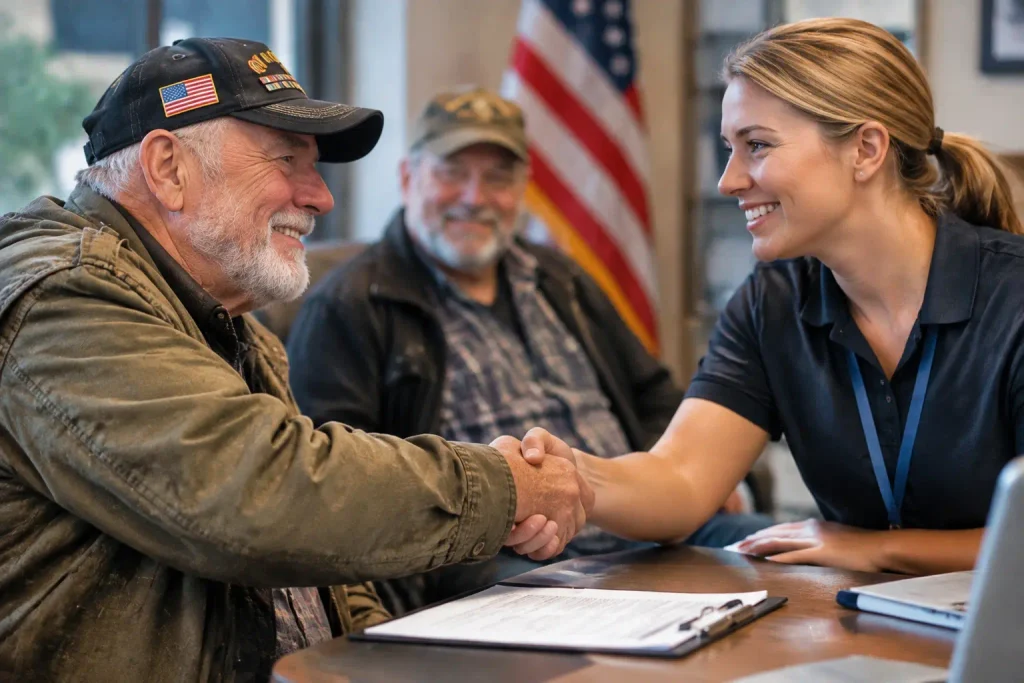
Government agencies are not the only organizations supporting veterans. Nonprofit groups and community organizations also help former service members and their families.
Some organizations focus on disability assistance, while others provide financial guidance, housing resources, healthcare referrals, or employment support.
Examples include:
- American Legion: Provides advocacy, community activities, and veteran assistance.
- Veterans of Foreign Wars (VFW): Supports eligible veterans through advocacy and assistance programs.
- Disabled American Veterans (DAV): Helps disabled veterans access benefits and services.
- Wounded Warrior Project: Offers programs for eligible wounded veterans and their families.
- National Veterans Foundation: Connects veterans and families with information and support resources.
These organizations have different eligibility requirements and services. Veterans should check their official websites before applying for assistance.
How to Apply for Veterans Benefits
The process of applying for veterans’ benefits depends on the type of assistance required.
A veteran seeking healthcare will follow a different application process from someone applying for disability compensation or education assistance.
The following steps provide a useful starting point:
- Collect military documents: Gather service records and relevant discharge paperwork.
- Identify the benefit: Decide whether you need medical care, financial compensation, housing, education, or employment assistance.
- Review eligibility: Read the official program requirements carefully.
- Prepare supporting evidence: Collect medical records, financial documents, and other required information.
- Submit the application: Use the appropriate government website or authorized application process.
- Follow up: Monitor the application and respond to requests for additional documentation.
Veterans can also seek help from VA-accredited representatives and recognized veterans service organizations.
Using official resources is important because some unofficial websites make misleading promises about guaranteed benefits or payments.
The Difference Between Veterans Day and Memorial Day
Veterans Day and Memorial Day are both important American military observances, but they recognize different groups.
Veterans Day takes place on November 11 and honors all American veterans, whether they served during wartime or peacetime.
Memorial Day takes place on the last Monday in May and primarily honors military personnel who died while serving their country.
Both occasions include ceremonies, public tributes, and opportunities to reflect on military service.
Understanding the distinction helps explain why Veterans Day is particularly important to living former service members and their families.
Why Supporting Veterans Matters Beyond November 11
Recognizing military service should not be limited to a single day each year.
Many veterans continue to face challenges after leaving the armed forces. These may include physical injuries, mental health conditions, unemployment, housing difficulties, and financial pressure.
Access to healthcare, education, stable employment, and suitable housing can make a major difference in their civilian lives.
Families also play an important role. Spouses, children, and caregivers may need information about available benefits and support services.
A strong support system helps veterans remain connected to their communities and build stable futures after military service.
Conclusion
Veterans have played a significant role in shaping the history and security of the United States. Their service spans generations, from World War II and the Korean and Vietnam Wars to modern military operations.
In 2026, Veterans Day remains an important occasion to recognize their contributions. At the same time, access to healthcare, disability compensation, education, housing, and employment assistance remains essential for eligible former service members.
Whether someone is researching American military history, looking for veterans’ benefits, or learning about Veterans Day, reliable information from official government agencies and established historical organizations is the best place to start.
Supporting veterans means recognizing their service while helping them access the resources and opportunities they need throughout civilian life.
SOURCE: Wikipedia
You May Also Like
 Army-Navy Game 2026: Latest News, Date, Time, Teams, History and How to Watch
 Bitcoin: Latest News, Price Trends, Mining, ETFs, Blockchain and Future Outlook (2026)
 Usman Khawaja: Biography, Career Stats, Latest News, Wife and Pakistan Connection (2026)
 Colorado: Complete Guide to Population, Cities, Weather, Attractions and Latest Trends (2026)
 Sophie Cunningham: Age, Partner, WNBA Career, Height and Latest News (2026)
 Ross Lynch: Wife, Age, Marriage News, Movies and Music Career (2026)