
A U.S. Green Card allows eligible immigrants to live and work permanently in the United States. It can also provide a path to U.S. citizenship for those who meet the legal requirements.
Many people want to know how to get a Green Card, how much it costs, and how long approval takes. The answers depend on the applicant’s immigration category and personal circumstances.
This guide covers the latest immigration updates, eligibility rules, application steps, and other important information for Green Card applicants.
Latest Green Card News and Immigration Updates
Green Card rules, visa availability, and processing times can affect immigration plans. Applicants should follow official government announcements before making decisions.
Diversity Visa Program Update
On August 31, 2026, the U.S. Department of State published guidance announcing a pause in Diversity Visa issuance. The guidance said applications and interviews could continue, but Diversity Visas would not be issued during the pause. <Cite refs={[“turn378996search6”]}/>
This update matters to people selected through the Green Card lottery. Selection does not guarantee a visa. Applicants should check the official Diversity Visa guidance for changes.
October 2026 Visa Bulletin
The October 2026 Visa Bulletin provides updated information about family-sponsored and employment-based immigrant visa availability. Waiting times vary by category and country of chargeability. <Cite refs={[“turn378996search1″,”turn378996search3”]}/>
Applicants should review the official Visa Bulletin to understand whether a visa number is available for their case.
These updates do not mean that every Green Card application is paused. Always check whether an announcement applies to your immigration category.
What Is a Green Card?
A Green Card is the common name for a U.S. Permanent Resident Card. It proves that a person has lawful permanent resident status.
Green Card holders can generally live and work permanently in the United States. They may also sponsor certain family members and apply for citizenship if they meet the requirements.
However, permanent residents do not have all the rights of U.S. citizens. For example, they generally cannot vote in federal elections.
ARTICAL :Pickleball: Rules, Court, Scoring & How to Play
Is a Green Card a Visa?
No. A Green Card and a visa serve different purposes.
A visa generally allows someone to travel to a U.S. port of entry and request admission for a specific purpose. Many visas are temporary.
A Green Card proves permanent resident status. People applying from outside the United States may first receive an immigrant visa before entering the country as permanent residents.
Having a temporary visa does not automatically qualify someone for a Green Card.
Who Can Apply for a Green Card?
Eligibility depends on the immigration category. Common routes include the following.
- Family-based immigration: Eligible relatives of U.S. citizens or permanent residents may qualify. Many cases begin with Form I-130.
- Employment-based immigration: Some workers qualify through an employer, professional qualifications, or specific employment categories.
- Diversity Visa Program: Eligible applicants may enter the Green Card lottery under the program’s rules. Selection does not guarantee a visa.
- Refugees and asylees: Certain people with approved refugee or asylum status may qualify for permanent residency.
- Other categories: Special immigrants and some eligible investors may qualify under separate rules.
Not everyone qualifies under every category. Review the USCIS Green Card guide before applying.
How to Get a Green Card in the USA
The process depends on your immigration category and whether you are inside or outside the United States.
Step 1: Check your eligibility. Identify the category that fits your circumstances, such as family sponsorship or employment.
Step 2: File the required petition. Many applicants need an approved petition before applying for permanent residency. The correct form depends on the category.
Step 3: Complete the application. Eligible applicants inside the United States may use adjustment of status, often through Form I-485. Applicants abroad generally follow consular processing.
Step 4: Prepare your documents. You may need a passport, birth certificate, marriage certificate, sponsorship evidence, or other records.
Step 5: Attend appointments. USCIS or the Department of State may require fingerprints, background checks, a medical examination, or an interview.
Step 6: Wait for a decision. The agency reviews your application and may approve it, deny it, or request more evidence.
Step 7: Receive your card. After approval, follow the instructions for receiving your permanent resident documentation.
Missing documents or incorrect information can delay the process. Always follow the official instructions for your case.
How Much Does a Green Card Cost?
The total cost depends on your application category and process. Expenses may include government filing fees, medical examinations, visa fees, and document preparation.
There is no single fee for every applicant. Government fees can also change.
Before filing, check the USCIS fee calculator and the instructions for your specific application. Be careful with anyone who promises guaranteed approval.
How Long Does It Take to Get a Green Card?
Processing times vary by category, visa availability, application type, and individual circumstances.
Some applicants may receive decisions sooner than others. Family-sponsored and employment-based categories can involve longer waits when visa numbers are limited.
To check your timeline, use the USCIS processing times tool. If your category requires a visa number, review the Department of State Visa Bulletin as well.
Online estimates are not guarantees of approval or delivery.
Green Card Benefits, Travel and Work Rights
A Green Card offers several important benefits.
- Permanent residence: You can generally live in the United States permanently while maintaining your status.
- Employment: Permanent residents can generally work without a separate employment authorization document for that status.
- Family sponsorship: Eligible residents can petition for certain relatives.
- International travel: You can generally travel abroad and return with the required documents.
- Possible citizenship: Many Green Card holders can later apply for naturalization.
Long trips outside the United States may raise questions about whether you have maintained permanent residence. A reentry permit may help in some situations, but it does not guarantee admission.
Check official guidance before planning an extended stay abroad.
How to Renew an Expired Green Card
Many standard Green Cards are valid for 10 years. Conditional resident cards are generally valid for two years.
If your card expires, is lost, or is damaged, you may need to renew or replace it. Many permanent residents use Form I-90.
Conditional residents usually follow a different process to remove the conditions on their status. They should not use an ordinary renewal as a substitute.
Check the official renewal guidance to find the correct process for your situation.
Can a Green Card Lead to U.S. Citizenship?
Yes. Many permanent residents can apply for citizenship through naturalization.
The general residence requirement is often five years. Certain spouses of U.S. citizens may qualify under a three-year rule if they meet additional conditions.
Applicants must also meet other requirements, which may include continuous residence, physical presence, good moral character, and English and civics requirements. Review the USCIS citizenship guide before applying.
Common Green Card Mistakes to Avoid
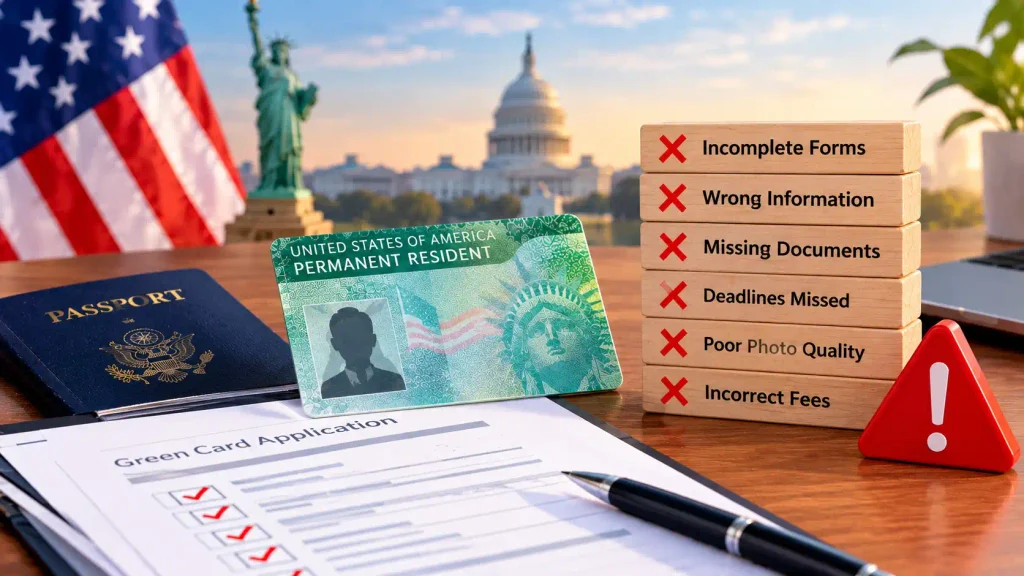
Applicants can reduce preventable delays by avoiding these common mistakes:
- Submitting the wrong form or missing required documents.
- Providing incorrect or inconsistent information.
- Missing appointments or application deadlines.
- Ignoring visa availability requirements.
- Trusting websites that promise guaranteed Green Card approval.
- Making long-term travel plans without checking immigration rules.
If your case involves a visa overstay, criminal history, or removal proceedings, consider consulting a qualified immigration attorney.
Frequently Asked Questions About Getting a Green Card
1. What Is a Green Card?
A Green Card proves lawful permanent resident status in the United States. It generally allows eligible immigrants to live and work permanently in the country, subject to immigration law.
2. How to Acquire a Green Card?
First, identify a category for which you qualify. Common options include family sponsorship, employment, the Diversity Visa Program, and certain humanitarian routes. Then complete the required application process.
3. How to Get a Green Card in the USA?
If you are already in the United States, you may qualify for adjustment of status through Form I-485. Applicants outside the country generally follow the immigrant visa process. Eligibility depends on individual circumstances.
4. How Can You Get a Green Card?
You must qualify under an available immigration category and submit the required forms and evidence. A qualifying relative or employer may sponsor you, depending on the category. Approval is not automatic.
5. How Long Does It Take to Get a Green Card?
The timeline depends on your category, visa availability, and application details. Check USCIS processing times and the Visa Bulletin for current information relevant to your case.
Final Thoughts
A U.S. Green Card can offer permanent residency, employment opportunities, and a possible path to citizenship. However, the correct application route depends on your circumstances.
Recent immigration updates show why applicants should check official sources regularly. Before filing forms, paying fees, or making travel plans, verify the latest rules on government websites. Accurate information can help you understand your options and avoid common mistakes.
source:Wikipedia