
Rikers Island is one of the most controversial correctional facilities in the United States. Located in the East River between Queens and the Bronx in New York City, it has remained at the center of discussions about criminal justice, jail conditions, public safety and correctional reform. The island is home to a large jail complex operated by the New York City Department of Correction (NYC DOC).
For decades, Rikers Island has attracted national attention because of overcrowding, violence, staffing shortages, medical care concerns and the treatment of people held in custody. It has also become a major subject of debate over whether traditional jail systems can provide safe and effective detention while protecting the rights of people awaiting trial.
The latest developments have brought renewed attention to the facility. On November 20, 2026, New York City Mayor Zohran Mamdani announced a comprehensive strategy proposing to move incarceration away from Rikers Island by the end of 2032. The plan includes four new borough-based jails, efforts to reduce the city’s jail population and additional investments in mental health and rehabilitation services.
However, Rikers Island remains operational while these changes are being considered. People searching for information about the facility may also want to locate an incarcerated person, understand the visiting process, learn about its correctional centers or follow the latest closure developments.
This guide explores the island’s history, current situation, inmate search services, controversial conditions and proposed future.
What Is Rikers Island?
Rikers Island is a correctional complex in New York City that houses people held in the city’s local detention system. It covers approximately 400 acres and is situated in the East River, near Queens and the Bronx.
The facility is operated by the New York City Department of Correction rather than the New York State prison system. This distinction matters because Rikers Island primarily holds people awaiting criminal court proceedings, as well as individuals serving sentences in city custody.
Not everyone detained at Rikers Island has been convicted of a crime. Many people are awaiting trial, dealing with bail decisions or remaining in custody while their cases move through the court system.
The island contains multiple correctional buildings, administrative operations and support facilities. Different buildings have historically served different populations according to factors such as age, gender, legal status and security classification.
Rikers Island has become internationally recognized because of its long history of correctional challenges. Investigations, public reports, legal proceedings and criticism from families and civil rights organizations have raised questions about safety, medical treatment and the overall effectiveness of the city’s jail system.
Today, discussions about Rikers Island involve more than its daily operations. Its future has become an important part of New York City’s broader criminal justice reform debate.
ARTICAL: https://americanstime.com/coin/
Rikers Island Latest News: Mamdani’s 2032 Closure Proposal
One of the biggest developments involving Rikers Island in November 2026 is Mayor Zohran Mamdani’s proposal to extend the timeline for closing the jail complex.
On November 20, 2026, Mamdani introduced the city’s first comprehensive roadmap for replacing Rikers Island with smaller correctional facilities across the five boroughs, although the current plan identifies four borough locations.
The announcement is significant because New York City has struggled to meet its original closure deadline. Under the 2019 city law, incarceration on Rikers Island was supposed to end by August 31, 2027.
However, construction delays, operational challenges and the need to reduce the number of people held in city jails have made that deadline difficult to achieve.
The new proposal would move the closure target to December 31, 2032. Changing the existing deadline requires City Council approval.
What Are the Four New Borough-Based Jails?
The proposed correctional system will include facilities in Brooklyn, Queens, the Bronx and Manhattan.
The city intends to replace the large island-based complex with smaller facilities located closer to courts, families, attorneys and public transportation.
The proposed opening timeline is:
Borough Expected opening
Brooklyn 2029
Queens 2031
Bronx 2031
Manhattan 2032
The new buildings are intended to provide improved housing, individual cells, educational opportunities, vocational programs, medical services and better supervision.
The plan also includes community spaces as part of the proposed facilities.
One of the central arguments behind this approach is that people in custody should have better access to legal representation and family connections. Traveling to an isolated island can create additional difficulties for families, particularly those with limited transportation options.
Why Does New York Want to Reduce Its Jail Population?
Building replacement facilities is only one part of the closure strategy.
New York City also needs to reduce the number of people held in its correctional system. The proposed plan aims to bring the jail population down from approximately 6,600 people to around 4,100.
This reduction is important because the replacement facilities are designed to accommodate fewer people than the existing system.
The administration plans to address the population through several measures:
- Reducing unnecessary pretrial detention.
- Speeding up criminal court proceedings.
- Expanding alternatives to incarceration.
- Improving access to supportive housing.
- Increasing mental health treatment.
- Providing substance use services and rehabilitation programs.
The goal is to reduce the number of people entering or remaining in detention while maintaining public safety.
How Much Will the New Rikers Island Plan Cost?
The financial side of the closure is another major part of the discussion.
New York City’s proposed replacement jail program is now estimated to cost approximately $16 billion, according to reporting published on November 20, 2026. This is significantly higher than the original estimated cost of approximately $8.7 billion.
The city has also announced plans for $146 million in additional investments in programs involving mental health, substance use treatment, education, employment training and other services.
These investments reflect the administration’s argument that closing Rikers Island requires more than constructing new buildings. It also requires changes to the criminal justice system that influence how many people are detained.
However, the proposal faces financial, construction and political challenges. The New York City Council must approve the proposed extension of the closure deadline before it can replace the existing legal timeline.
The new plan therefore represents a proposed roadmap, not a completed closure.
Is Rikers Island Still Operating in 2026?
Yes. Rikers Island continues to operate as a New York City correctional complex as of November 20, 2026.
Although the city is preparing to move incarceration operations elsewhere, the entire island has not been shut down.
Some individual buildings and portions of facilities have already been closed or transferred as part of the transition. These changes are part of a gradual process rather than a single closure event.
The distinction between closing an individual correctional building and closing the entire island is important. The latter requires the city to establish enough replacement capacity, transfer people in custody and complete the necessary legal and administrative changes.
Until those steps are completed, Rikers Island will remain part of New York City’s correctional system.
Rikers Island Inmate Lookup: How to Find Someone in Custody
One of the most common searches related to Rikers Island involves finding a person who may be detained there.
Family members, friends and legal representatives often need to confirm whether someone is in custody and identify their current correctional facility.
The New York City Department of Correction provides an official Person in Custody Lookup service for this purpose.
Steps to Search for an Incarcerated Person
If you are trying to locate someone in the New York City jail system, follow these steps:
- Open the official NYC Department of Correction Inmate Lookup.
- Select the available search option.
- Enter the person’s first and last name.
- Provide additional identifying details if requested.
- Use a New York State Identification Number (NYSID) or Book and Case Number if available.
- Review the results to identify the correct person.
- Check the listed facility and available custody information.
Using accurate information is important because multiple people may have similar names.
What Details Help With an Inmate Search?
Before beginning an inmate lookup, try to collect as much relevant information as possible.
Useful details include:
- Full legal name.
- Correct spelling of the first and last name.
- Date of birth, if known.
- NYSID number, if available.
- Book and Case Number, if available.
Additional identifying information can help distinguish one person from another when the search returns multiple results.
What Should You Do If an Inmate Does Not Appear?
Sometimes a person cannot be found through the online lookup service, even when family members believe they are being held in custody.
There are several possible reasons:
- The person was arrested recently.
- The custody record has not yet been updated.
- The individual was transferred to another facility.
- The person has already been released.
- Incorrect spelling or identifying information was entered.
- The individual is being held by a different correctional authority.
The NYC Department of Correction states that most information, including release details, is generally updated within approximately 15 minutes, while some other information may take longer.
If the search is unsuccessful, try again later or contact NYC 311 for assistance.
Is the New York State Inmate Search the Right Database?
Not necessarily.
Rikers Island belongs to the New York City correctional system, while New York State prisons operate under a separate government department.
This means someone held in a city jail may not appear in the same database used to locate individuals serving sentences in state prisons.
For a person believed to be at Rikers Island, the NYC DOC Person in Custody Lookup should be the first place to check.
If the person has subsequently been transferred into the state prison system, a state inmate search may become more relevant.
Rikers Island Jail Conditions: Why Has the Facility Faced So Much Criticism?
The conditions inside Rikers Island have been a major source of public concern for many years.
Families of incarcerated people, correctional employees, advocacy organizations and government investigators have raised questions about violence, overcrowding, medical care and supervision.
These issues have contributed to the wider movement calling for the closure of the island’s jail complex.
Violence and Safety Concerns
Violence involving people in custody and correctional employees has been one of the most frequently discussed problems.
Reports of assaults and unsafe housing conditions have raised concerns about whether the existing system can consistently protect everyone inside the facilities.
Improving supervision, accountability and staffing has therefore become an important part of correctional reform discussions.
Overcrowding and Aging Infrastructure
Many of the buildings associated with Rikers Island are decades old.
Aging infrastructure can create challenges involving maintenance, sanitation, security and the delivery of essential services.
Overcrowding can make these problems more difficult to manage because correctional facilities need sufficient space and staff to supervise their populations effectively.
The city’s replacement plan is intended to address some of these structural problems through smaller, modern facilities.
Mental Health and Medical Treatment
Mental health services are another major concern.
Some people held in city jails have serious psychiatric conditions, substance use disorders or complex medical needs. These individuals may require specialized treatment that ordinary correctional housing cannot adequately provide.
New York City’s proposed closure strategy includes additional therapeutic housing and expanded healthcare services.
The administration has also identified mental health treatment and rehabilitation as important parts of its investment plan.
Why Are Deaths in Custody Part of the Closure Debate?
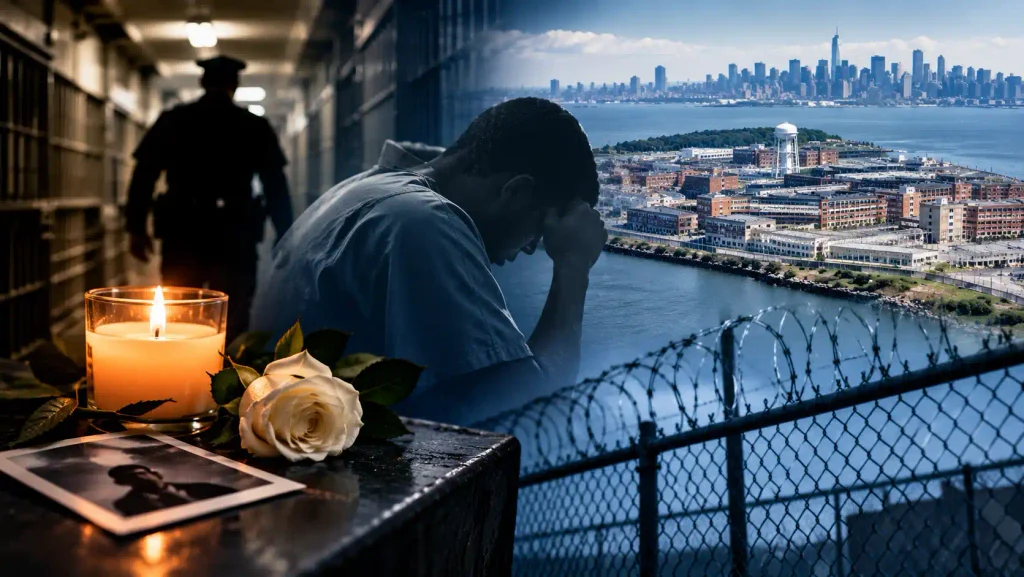
Deaths inside correctional facilities have intensified scrutiny of Rikers Island.
The issue is particularly serious because many people held in city jails are awaiting trial and have not been convicted of the charges against them.
According to reporting published on November 20, 2026, 15 people died in New York City Department of Correction custody during 2025, the highest annual figure since 2022.
This figure concerns the city’s correctional system, not necessarily deaths exclusively at Rikers Island.
The deaths have reinforced calls for improved medical care, safer housing, stronger supervision and accountability.
What Is the History Behind Rikers Island?
Rikers Island has a history that began long before it became one of America’s most recognized jail complexes.
The island takes its name from the Riker family, which owned the property before New York City acquired it in the late 19th century.
The city initially used the land for municipal purposes, including waste disposal. Over time, it developed the island into a location for correctional operations.
The first jail facility opened during the 1930s. Additional buildings were constructed in later decades, gradually turning the island into a major part of New York City’s detention infrastructure.
As the city expanded, the jail complex became responsible for holding a large population of people involved in the criminal justice system.
However, its growth also brought criticism about living conditions, overcrowding and the treatment of incarcerated individuals.
Over the decades, Rikers Island became the focus of investigations, legal challenges and reform campaigns.
The modern debate is no longer limited to improving individual buildings. It increasingly focuses on whether New York City should continue using the island as a correctional center at all.
What Are the Main Correctional Centers on Rikers Island?
Rikers Island has historically contained several correctional buildings serving different populations and operational needs.
Their roles have changed over time as the city has closed buildings, transferred facilities and prepared for the borough-based jail system.
Anna M. Kross Center
The Anna M. Kross Center, commonly known as AMKC, is one of the best-known facilities associated with Rikers Island.
It opened in 1978 and was named after Anna M. Kross, the second woman to serve as commissioner of the New York City Department of Correction.
The center historically housed adult men in city custody and became an important part of the island’s correctional infrastructure.
It has also been associated with wider discussions about staffing, safety and facility conditions.
Eric M. Taylor Center
The Eric M. Taylor Center is another correctional building historically associated with Rikers Island.
It has served different populations, including sentenced male adults and adolescents.
Its role has been connected to the city’s broader efforts to organize people in custody according to age, legal status and correctional requirements.
Rose M. Singer Center
The Rose M. Singer Center has historically served women in New York City’s correctional system.
It has played an important role in the housing and supervision of women in custody.
The proposed borough-based system is expected to provide specialized housing for women at the future Queens facility.
George R. Vierno Center
The George R. Vierno Center is another major building in the island’s correctional complex.
It has historically housed detained adult men and formed part of the wider detention network.
Like other facilities, its history is connected to concerns about infrastructure, supervision and the need for correctional reform.
Other Facilities Associated With the Island
Other buildings historically connected with Rikers Island include:
- Otis Bantum Correctional Center.
- Robert N. Davoren Complex.
- George Motchan Detention Center.
- North Infirmary Command.
- James A. Thomas Center.
It is important to understand that historical facility lists do not necessarily represent current operations. Some buildings have closed or undergone transfers as part of the city’s transition plan.
Readers looking for current information should consult the NYC Department of Correction facilities directory.
How Do Rikers Island Visiting Hours Work?
Visiting someone at Rikers Island requires following the New York City Department of Correction’s visitation procedures.
The department provides in-person visits and televisits, subject to eligibility and the applicable schedule.
In-person visiting days have generally included Wednesday, Thursday, Saturday and Sunday, while Friday has been designated for televisits under the published schedule.
Registration hours have generally been:
Day General registration hours
Wednesday 1 PM–6 PM
Thursday 1 PM–6 PM
Friday Televisits
Saturday 7 AM–12 PM
Sunday 7 AM–12 PM
These times should be treated as general published registration information, not confirmation of a specific person’s appointment.
The schedule may depend on the incarcerated person’s last name, facility and current eligibility.
What Should Family Members Check Before Visiting?
Before making a journey, visitors should:
- Confirm the person’s current facility.
- Check the latest monthly visitation schedule.
- Verify eligibility for an in-person visit.
- Bring an acceptable form of identification.
- Review clothing and security requirements.
- Check transportation arrangements.
- Allow sufficient time for registration and screening.
Regular visits have generally operated on a walk-in basis, but visitors should verify the latest rules rather than relying on an old schedule.
Are Virtual Visits Available?
Yes. The NYC Department of Correction provides televisit options for eligible visitors.
Virtual visits can help families communicate with people in custody without traveling to the island.
The availability and scheduling requirements should be confirmed through the official NYC DOC Virtual Visitors Center.
Rikers Island Bridge and Transportation: How Can Visitors Reach the Jail?
Rikers Island is surrounded by water, so transportation is an important consideration for anyone visiting the correctional complex.
The Rikers Island Bridge connects the island to Queens and provides the main road connection for authorized vehicles, correctional employees, service providers and visitors.
Does the Q100 Bus Go to Rikers Island?
Yes. The MTA Q100 bus is an important public transportation option.
It crosses the Rikers Island Bridge and serves the Central Visit House, making it useful for family members traveling to visit someone in custody.
The city has also provided visitor transportation services from designated locations in Harlem and Brooklyn.
According to NYC 311, these services have operated Wednesday through Sunday, although visitors should verify current arrangements before traveling.
Is Parking Available Near Rikers Island?
Parking near visitor facilities is limited.
Because of transportation restrictions and the island’s location, public transportation is generally a practical option for many visitors.
Checking the current MTA schedule and official NYC DOC transportation information before leaving can help prevent delays.
What Will Happen to Rikers Island After the Jails Close?
The future of Rikers Island is another important part of the city’s long-term planning.
Once correctional operations move elsewhere, New York City will have an opportunity to reconsider how the island is used.
Possible ideas include renewable energy, environmental projects, sustainability initiatives and other community-oriented uses.
The Department of Citywide Administrative Services is expected to play an important role in the island’s future planning.
Could Rikers Island Become a Renewable Energy Center?
Renewable energy is among the possibilities being explored for the island.
New York City has broader environmental goals involving clean energy and sustainable infrastructure, and Rikers Island could potentially contribute to those efforts.
However, no final comprehensive redevelopment plan should be assumed at this stage.
Environmental conditions, infrastructure, public access and the island’s history will all influence future decisions.
Will Rikers Island Become a Public Park?
A public park has been discussed as one possible idea in broader conversations about the island’s future, but a complete park redevelopment has not been confirmed as the final plan.
The city must first relocate correctional operations and complete the necessary planning and environmental assessments.
The island’s next chapter could involve several different uses rather than one single development project.
Why Are Borough-Based Jails Important to New York City’s Future?
The replacement jail plan is about more than moving incarcerated people from one location to another.
It represents a proposed change in how New York City approaches detention, family connections, rehabilitation and public safety.
The existing island complex is geographically separated from many neighborhoods, making regular visits and legal communication difficult for some families.
The proposed borough-based facilities aim to reduce that distance.
Smaller facilities could also provide more specialized services and improved access to educational programs.
However, the plan faces an important challenge: reducing the number of people held in custody without creating new public safety problems.
If the city does not achieve its population reduction goals, it may struggle to operate the smaller replacement system as planned.
This is why court delays, alternatives to detention, supportive housing and rehabilitation programs are central to the closure strategy.
The success of the transition will depend on both the construction of replacement facilities and broader changes across the criminal justice system.
Frequently Asked Questions About Rikers Island
1. Is Rikers Island still open to people in custody in 2026?
Yes. Rikers Island remains part of New York City’s correctional system in November 2026. Although some individual buildings have closed or been transferred, the entire jail complex continues to operate while the city prepares its replacement facilities. The proposed deadline for ending incarceration on the island is December 31, 2032.
2. Why does Rikers Island receive so much attention in American news?
The island frequently appears in national news because of its history of correctional problems, including violence, overcrowding, deaths in custody, medical care concerns and criminal justice reform debates. Its proposed closure has also made it an important political and public policy issue.
3. What should someone know before searching for Rikers Island?
It is important to understand that Rikers Island is a New York City jail complex, not a state prison. People looking for an incarcerated individual should generally use the NYC Department of Correction’s official lookup service rather than relying exclusively on a New York State prison database.
4. Why has the original closure deadline become difficult to meet?
New York City’s original 2027 deadline has been challenged by construction delays, the cost of replacement facilities and the difficulty of reducing the jail population. Mayor Mamdani’s November 2026 proposal seeks to extend the deadline to 2032, subject to City Council approval.
5. What could change for families if the closure plan succeeds?
Families could benefit from replacement facilities located closer to residential neighborhoods, courts and public transportation. The proposed system is also intended to improve access to legal services, educational opportunities and healthcare. However, the actual benefits will depend on how the new facilities are built and operated.
Final Thoughts
Rikers Island remains one of the most important and controversial parts of New York City’s criminal justice system. Its history, correctional conditions, inmate lookup services and proposed closure continue to attract attention from families, journalists, researchers and the general public.
The November 20, 2026, announcement by Mayor Zohran Mamdani has introduced a new chapter in the island’s future. The proposed 2032 closure deadline, four borough-based jails and additional investments in rehabilitation represent a significant attempt to change how New York City manages detention.
For families, practical information about locating someone in custody and checking visitation rules remains essential. For policymakers and residents, the larger question is whether New York can build a safer and more effective correctional system while successfully moving away from Rikers Island.
The island’s future will ultimately depend on the city’s ability to complete construction, reduce unnecessary detention, improve correctional conditions and develop a clear plan for the land after incarceration ends.
SOURCE: Wikipedia
You May Also Like
 NVIDIA Earnings: Latest News, Report Date, AI Growth and NVDA Stock Outlook
 Pierce Brosnan: Biography, Age, Movies, Wife, James Bond and Latest News
 Nasdaq Index: Latest Market News, Nasdaq Composite, Nasdaq-100, Performance and Stock Trends
 Markets Today: Latest US Stock Market News, Trending Stocks, AI and Financial Updates
 Michael J. Fox: Age, Career, Parkinson’s Disease, Wife, Family and Latest News in 2026
 Alix Earle: Age, Career, TikTok Fame, Relationships and Latest News in 2026