
The word indictment frequently appears in American news coverage, especially when federal prosecutors bring criminal charges against politicians, public officials, journalists or other well-known individuals. Recent cases involving Sheila Cherfilus-McCormick, James Comey, Don Lemon and Letitia James have brought renewed attention to the American criminal justice system.
But what does an indictment actually mean? Does it mean someone is guilty, can an indicted person go to jail, and what happens after a grand jury approves criminal charges?
An indictment is a formal accusation that someone has allegedly committed a crime. In federal felony cases, it is generally issued after a grand jury reviews evidence presented by prosecutors and determines that probable cause exists to bring charges. It is not a conviction, and the accused person has the right to defend themselves in court.
Understanding this legal term is particularly important when following breaking news because an investigation, an indictment, an arrest and a conviction are not the same thing.
This guide explains the meaning of indictment, the legal process behind it, the difference between various criminal charges and the latest developments in several high-profile cases attracting public attention.
Understanding the Meaning of an Indictment
An indictment is a formal legal document that identifies the criminal offenses a person is accused of committing. It explains the charges prosecutors intend to pursue and provides the legal basis for moving a criminal case forward.
In the United States, federal prosecutors generally use a grand jury to obtain indictments for serious federal crimes. The grand jury reviews evidence and decides whether there is enough legal basis to charge the accused person.
For example, imagine investigators discover evidence suggesting that a business executive improperly transferred government money into personal accounts. Prosecutors may present financial records, witness testimony and other evidence to a grand jury. If the required number of jurors agrees that probable cause exists, the grand jury may return an indictment.
However, the decision does not establish that the executive committed the alleged offense. The prosecution must still prove its case through the legal process.
An indictment may include:
- The identity of the person facing criminal charges.
- The specific offenses being alleged.
- The relevant criminal statutes.
- Separate counts for different alleged violations.
- Information describing the alleged criminal conduct.
A single indictment can contain multiple counts, meaning prosecutors are pursuing several separate criminal allegations within the same case.
ARTICAL: Zoo Lights 2026: Tickets, Dates, Best Christmas Light Events and Visitor Guide
How Does the Indictment Process Begin?
An indictment usually follows an investigation, but the exact procedure depends on the type of offense and whether the case is being handled in federal or state court.
Investigation and Collection of Evidence
Law enforcement agencies first investigate suspected criminal activity. They may collect financial documents, examine electronic communications, interview witnesses and review other relevant evidence.
Federal investigations can involve agencies such as the FBI, IRS Criminal Investigation and other government departments.
The purpose of this stage is to establish what happened and determine whether the available evidence supports potential criminal charges.
Prosecutors Examine the Case
Once investigators complete their work, prosecutors review the findings and decide whether formal charges should be pursued.
They consider the applicable laws, available evidence, witness credibility and whether the alleged conduct meets the requirements of a criminal offense.
In federal felony cases, prosecutors generally present their evidence to a grand jury rather than immediately taking the case to trial.
The Grand Jury Reviews the Evidence
A federal grand jury typically consists of 16 to 23 citizens. Prosecutors present evidence, call witnesses and explain the potential criminal violations.
Unlike a trial jury, a grand jury does not decide whether the defendant is guilty beyond a reasonable doubt.
Its responsibility is to determine whether probable cause exists to believe that a crime was committed and that the proposed defendant committed it.
At least 12 grand jurors must agree to return a federal indictment.
Formal Charges Are Issued
If the grand jury approves the charges, it returns an indictment. The document identifies the alleged offenses and becomes part of the criminal court proceedings.
Some indictments remain sealed temporarily, particularly when authorities are preparing an arrest or trying to protect an ongoing investigation.
Once the indictment becomes public, news organizations may report the charges and the identity of the defendant.
The Case Moves Into Court
The defendant generally appears before a judge, who explains the charges and addresses important legal matters.
The accused person may enter a guilty or not-guilty plea. Attorneys then prepare for pretrial proceedings, where they can challenge evidence, question legal procedures and present motions.
Depending on the circumstances, the case may eventually proceed to trial, end through a plea agreement or be dismissed.
What Happens to Someone After an Indictment?
An indictment is an important development, but it does not automatically mean the accused person will be arrested, convicted or sent to prison.
Several legal developments can follow.
Arrest or summons: Authorities may arrest the defendant if a warrant is issued. In other situations, the individual may receive instructions to appear in court.
Arraignment: The judge informs the defendant of the charges and asks for a plea.
Bail decision: A judge may decide whether the accused person can remain free while the case proceeds. Release conditions can depend on the alleged offense, flight risk and potential danger to the community.
Pretrial hearings: Prosecutors and defense attorneys address legal disputes, evidence and procedural questions.
Trial or plea agreement: The case may go before a jury, or the defendant may resolve it through a negotiated plea agreement.
The time required to complete these stages varies. A straightforward case may move relatively quickly, while complicated federal investigations can take years.
Why Are Political and Federal Indictments Trending?
Search interest in indictment-related terms often increases when prosecutors announce charges against recognizable public figures.
Political cases are especially newsworthy because they can involve government funding, campaign contributions, public responsibilities and disagreements about the use of federal authority.
However, the legal meaning of an indictment remains the same regardless of the defendant’s political position or public profile.
The following cases illustrate how different allegations and court developments can become major national news stories.
Major Indictment Cases and Their Latest Developments
Sheila Cherfilus-McCormick Indictment: The $5 Million FEMA Case
Florida Congresswoman Sheila Cherfilus-McCormick became the subject of a federal indictment announced by the Department of Justice on November 19, 2025.
The case concerns approximately $5 million in FEMA funds connected to a COVID-19 vaccination staffing contract involving Trinity Healthcare Services, a family-associated healthcare business.
According to prosecutors, the company received an overpayment in 2021, and the defendants allegedly transferred the money through multiple accounts to disguise its origin.
The indictment alleges that some of the funds were used to support Cherfilus-McCormick’s congressional campaign through contributions made in other people’s names.
The charges include allegations involving theft of government funds, money laundering, campaign finance violations and tax-related offenses.
Cherfilus-McCormick has denied wrongdoing and pleaded not guilty.
The case has attracted attention because it involves the use of federal disaster-related funding and allegations concerning campaign contributions. It also raises broader questions about how government contracts and political fundraising are regulated.
Importantly, the indictment contains allegations that must be established through the criminal justice process.
James Comey Indictment: Why the Former FBI Director Faces Multiple Cases
Former FBI Director James Comey has been involved in several separate federal criminal proceedings, making his legal situation one of the most closely followed indictment stories.
His first major case began in September 2025, when federal prosecutors accused him of making false statements to Congress and obstructing a congressional proceeding.
A federal judge later dismissed that indictment after finding that the prosecutor who obtained it had been unlawfully appointed. The government challenged the dismissal through an appeal.
In April 2026, Comey faced another indictment involving allegations connected to an Instagram photograph of seashells arranged to display the numbers 86 and 47. Prosecutors alleged that the post constituted threats against the president. Comey denied wrongdoing, and his attorneys challenged the charges.
A third federal case emerged in October 2026. Prosecutors filed a criminal information alleging that Comey transmitted and conspired to transmit national defense information to an unauthorized recipient in connection with a 2016 disclosure.
This third proceeding is particularly important because a criminal information is not the same as a grand jury indictment. Comey’s attorneys challenged the filing, arguing that the government had failed to bring the charges within the applicable statute-of-limitations period.
A federal judge postponed a decision on the dismissal request while prosecutors pursued a grand jury indictment.
As of November 21, 2026, these proceedings remained separate legal matters, with different allegations and procedural histories.
The Comey cases demonstrate why readers should examine the specific court proceeding rather than assume every criminal allegation against one person is part of a single indictment.
Don Lemon Federal Indictment: The Minnesota Church Protest Case
Journalist Don Lemon became involved in a federal criminal case following his coverage of an immigration-related protest at Cities Church in St. Paul, Minnesota, in January 2026.
The demonstration took place during a period of increased attention surrounding federal immigration enforcement. Protesters entered the church while a religious service was taking place, and Lemon covered the incident through interviews and livestream reporting.
Federal prosecutors alleged that Lemon and other defendants participated in conduct that interfered with the rights of people attending the religious service.
The case involved federal civil rights allegations, including conspiracy against rights and violations of the Freedom of Access to Clinic Entrances Act, commonly known as the FACE Act, which also contains protections relating to access to places of worship.
Lemon maintained that he was acting as a journalist covering a public-interest event rather than participating in criminal conduct.
His defense challenged the prosecution on First Amendment grounds, arguing that reporting on a demonstration should not be treated as participation in the alleged offenses.
The case generated national debate about press freedom, religious liberty, protest rights and the limits of federal criminal enforcement.
By November 2026, the proceedings had generated extensive pretrial litigation, including disputes over evidence and the indictment’s legal sufficiency. The allegations remained subject to court review, and the indictment itself did not establish guilt.
Letitia James Indictment: The Dispute Over Prosecutorial Authority
New York Attorney General Letitia James became the subject of a federal indictment in October 2025 involving allegations of mortgage fraud.
Prosecutors alleged that she made false statements connected to a property transaction. James denied wrongdoing and challenged the charges.
In November 2025, a federal judge dismissed the indictment after concluding that the prosecutor who brought the case had not been lawfully appointed.
The government appealed the ruling, bringing the dispute before the Fourth Circuit Court of Appeals.
The central legal question involved whether the prosecutor’s appointment was valid and whether the indictment could stand despite the appointment problem.
The appeals court heard arguments on September 15, 2026. As of November 21, 2026, the appeal was awaiting a decision.
This case is significant because it shows that criminal proceedings can be challenged over the legal authority of the prosecutor, not just the evidence supporting the allegations.
Liz Murrill Indictment Dismissal: Why Were the Charges Dropped?
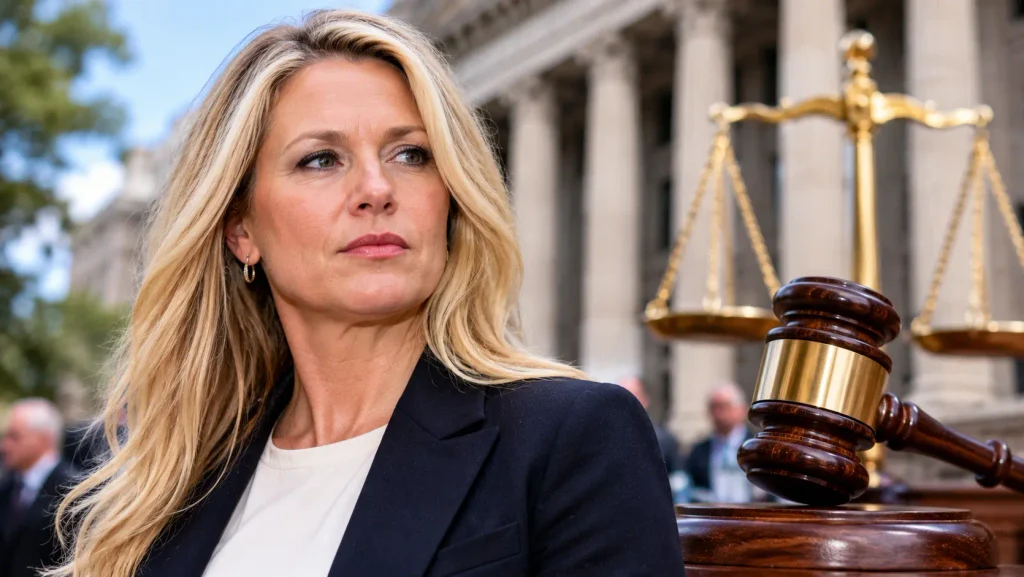
Louisiana Attorney General Liz Murrill faced a 16-count indictment in July 2026.
The charges involved allegations of intimidation and malfeasance in office connected to letters she sent to New Orleans officials during a dispute over the city’s court system.
The allegations concerned warnings about the legal consequences officials could face if they pursued certain appointments and election-related actions.
However, the case was quickly affected by procedural concerns. On July 22, 2026, special prosecutor Laurie White dismissed all 16 counts after receiving requests from New Orleans officials who had been identified as alleged victims.
The dismissal ended the prosecution at that stage.
Murrill denied wrongdoing, and the case became an example of how an indictment can be followed by a dismissal rather than a trial.
It also highlights the importance of understanding why charges are dropped instead of assuming that every dismissal represents a jury’s decision about guilt.
Kyle Chrisley Indictment: Understanding the Tennessee Charges
Kyle Chrisley, known for his connection to the television series Chrisley Knows Best, also became the subject of indictment-related searches in 2026.
The case followed his December 2025 arrest in Tennessee after an incident involving law enforcement officers.
According to reporting based on court records, a Rutherford County grand jury indicted him on nine counts in June 2026. The allegations included assault on law enforcement officers, retaliation, resisting arrest, disorderly conduct and public intoxication.
The charges related to claims about his conduct during the arrest.
Later reporting in October 2026 stated that Chrisley pleaded guilty to resisting arrest and that eight other charges were dismissed.
This development demonstrates that a criminal case can change significantly after an indictment. Some charges may be resolved through a plea, while others may be dismissed.
It is important to distinguish the original indictment from the later outcome of the individual charges.
Indictment vs. Criminal Charge: Understanding the Legal Difference
An indictment is one method of formally bringing criminal charges, but the two terms are not interchangeable in every situation.
A criminal charge refers broadly to an allegation that someone violated a criminal law. An indictment is a formal charging document generally returned by a grand jury.
Federal prosecutors may also use a criminal information in certain cases.
A criminal information is filed by a prosecutor without a grand jury returning an indictment. Depending on the applicable rules and the type of offense, it can be used as an alternative charging method.
This distinction is useful when following cases involving different legal procedures, including the separate proceedings against James Comey.
Can an Indictment Be Challenged or Dismissed?
Yes. A defendant has the right to challenge an indictment through the court system.
The defense may argue that the charges are legally defective, the grand jury process was improper, or prosecutors violated constitutional protections.
Some possible grounds for dismissal include:
- Insufficient legal grounds for the charges.
- Constitutional violations affecting the prosecution.
- Serious procedural defects.
- Improper prosecutorial conduct.
- Problems involving the grand jury process.
- Expiration of the applicable statute of limitations.
A judge reviews the arguments and determines whether the indictment or particular charges can proceed.
A dismissal may occur with or without prejudice. This distinction matters because it can determine whether prosecutors are permitted to bring the same charges again.
The reason for dismissal should always be considered when reporting on a high-profile criminal case.
Why Does a Grand Jury Matter in Federal Criminal Cases?
The grand jury serves as an important part of the American criminal justice system.
Its role is to review evidence and determine whether probable cause supports formal criminal charges. This provides an additional legal review before many serious federal criminal cases proceed.
Grand jury proceedings are generally conducted in private. This helps protect ongoing investigations, witnesses and people who may ultimately not be charged.
A grand jury is different from a trial jury in both purpose and responsibility.
A grand jury decides whether charges should be brought. A trial jury decides whether the prosecution has proved the defendant’s guilt beyond a reasonable doubt.
Understanding this difference helps explain why an indictment is not the outcome of a criminal case.
SOURCE: Wikipedia
You May Also Like
 Coin: Types, Value, Cryptocurrency, Coinbase Stock and Coin Flip Guide
 Urban Meyer: Maryland Coaching Rumors, Florida Legacy, Penn State and Latest News (2026)
 Paige Spiranac: Biography, Age, Golf Career, Net Worth, Photos, and Latest News (2026)
 Imelda Marcos: Famous Shoes Collection, Age, Biography, Family, and Latest News (2026)
 SLS Stock: Latest News, Price Prediction, SELLAS Life Sciences and 2027 Outlook
 NVIDIA Earnings: Latest News, Report Date, AI Growth and NVDA Stock Outlook
One Response