
US Consumer Confidence Drops Amid Government Shutdown
U.S. Patron sentiment has slumped sharply to certainly one of its weakest readings in over three years, in step with a University of michigan survey, as the extended federal government shutdown drags on. The sentiment index fell to 50.3 in early november, down from 53.6 in october, highlighting large financial tension throughout specific income agencies and political affiliations Economists say the drop displays a a deep challenge over process protection, the disruption of federal offerings, and uncertainty about when the shutdown would possibly give up. The survey also noted an upward push in inflation expectations among households. A few analysts warn that those bad sentiment traits could further drag patron spending, threatening gdp increase within the near time period, specifically if the political impasse keeps up.
Trump tells McDonald’s franchisees inflation fight is a daily battle
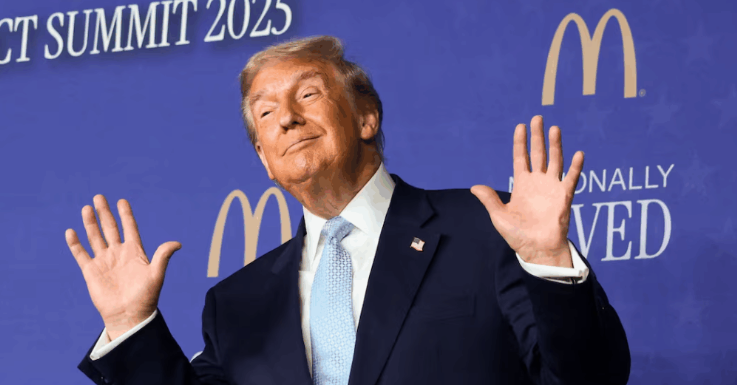
Former President Donald Trump met with McDonald’s proprietors, operators, and suppliers in Washington, wherein he touted his administration’s efforts to address inflation through tax cuts and reshoring of manufacturing. Trump recounted that even though development has been made, “there’s still a number of things to do” to ease the fee burden on Americans. He defended his tariff rules, declaring that he recently removed responsibilities on over 200 food imports, a flow he frames as part of a broader fight to lower dwelling costs. At the collection, Trump additionally floated unconventional proposals, like a $2,000 tariff-funded take-a-look-at for citizens and 50-year mortgage guidelines he argues could help everyday people navigate inflationary pressures. Economic watchers remain divided. While a few support his method for enhancing manufacturing and cutting tax burdens, others warn that tariff-funded giveaways could get worse, change tensions, and distort markets.
US Retail Sales Rise in October But Consumers Stay Cautious
Current information from the nationwide Retail Federation (NRF) suggests that U.S. retail income climbed by 0.6% in October, excluding car dealerships and gasoline stations. (NRF) Notwithstanding this monthly benefit, analysts warn that customers remain cautious. Circana, a market studies firm, reported that at the same time as spending on food and essentials rose, discretionary spending—especially on big-ticket gadgets—cooled. (Circana) The NRF’s October facts also confirmed a 5% year-over-year increase in overall retail sales (except automobiles and fuel), signalling moderate momentum as the holiday season starts. However, as NRF CEO Matthew Shay noted, “the latest economic statistics have been blended,” with inflation issues and chronic uncertainty nonetheless pressuring consumers. In the meantime, Circana pointed out that consumers are being “nimble” with their spending, prioritizing requirements and balancing wallets below inflationary headwinds. Inside the 4 weeks ending November 1, they found that whilst greenback income grew by 2%, the variety of items bought in keeping with the household stayed flat compared to the final year. Why This Matters: A 0.6% month-to-month bounce indicates that customer spending isn’t always definitely weakening precise news for stores as the holiday season tactics. However, cautious shopping behavior indicates Americans are looking at where they spend, which could restrict upside increases. For buyers and policymakers, the facts underscore an intricate balancing act: assisting growth without igniting inflation.
US government shutdown setback casts shadow over Q4 growth
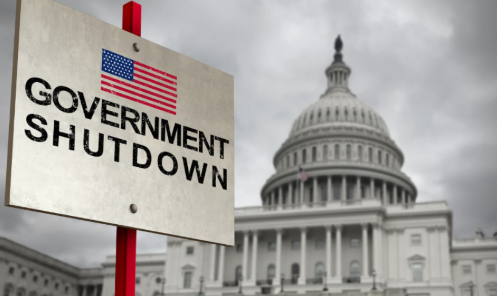
The 39-day federal government shutdown in the United States is showing signs of potential resolution, but its lingering effects are already weighing on economic growth and investor sentiment. The Senate cleared a procedural vote Sunday to move ahead with legislation aimed at reopening the government, offering a glimmer of relief for markets and federal workers alike. Reuters +1 Despite this progress, economists warn that the damage may already be done: output in the fourth quarter is at risk of slipping into negative territory if the shutdown continues. ReutersMajor sectors such as air travel are facing delays due to staff shortages among air traffic controllers, a key example of the shutdown’s wide-ranging ripple effects. Reuters Market responses were swift. Stock futures rose; S&P 500 futures climbed 0.8%, and Nasdaq-100 futures jumped 1.3% as the possibility of an end to the shutdown eased some of the uncertainty that has weighed heavily on investor sentiment. Reuters analysts caution, however, that the data backlog produced by the shutdown will take time to clear and could leave growth forecasts muted for months. Why this matters: A government shutdown doesn’t just halt services; it delays data releases, disrupts operations, and chips away at confidence in the economy. The possible slide into negative growth for Q4 raises risks for global markets, especially given the U.S. economy’s outsized role. For your readers interested in economics and markets, this story connects policy gridlock with everyday impacts: from job security to borrowing costs. Key takeaway:Even as lawmakers move toward reopening the government, the disruption has already cast a large shadow over the U.S. economy. Whether growth rebounds in the coming quarters will depend on how quickly normal operations resume and how deeply the freeze affected private and public sectors alike.
US job market shifts: “No hire, more fire” trend emerging
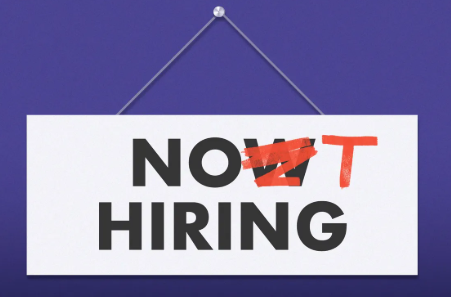
New data show that the US labor market is undergoing a noticeable shift. Employers announced nearly 950,000 job cuts between January and September 2025, highlighting a departure from the earlier “no hire, no fire” scenario to what analysts are calling a “no hire, more fire” environment. Reuters+1 Major names across tech, retail, and government sectors are part of this trend. For example, companies such as Amazon, UPS, and Intel have announced large-scale job reductions, citing automation, cost-cutting, and the end of pandemic-era hiring booms. Reuters The slowdown is especially significant because it comes at a time when government data releases like the official employment report have been delayed due to the ongoing federal shutdown. Private-sector job trackers suggest that hiring is weak and layoffs are rising. Reuters+1 Why it matters: A weakening labor market can affect consumer spending, which is a major driver of the US economy. With hiring down and layoffs up, workers may become more cautious, affecting industries that depend on discretionary spending. For your readers, this signals a moment of change in the US economy: not outright collapse, but caution and recalibration. Key Takeaway:The US job market has now entered a phase where companies are not aggressively hiring and are increasingly trimming jobs. If this continues, it may reshape economic growth patterns in the near term.
Mass layoffs reach nearly 1 million in U.S. job market shake-up

U.S. companies announced about 950,000 layoffs in the first nine months of 2025, marking a sharp uptick in job cuts as businesses turn more cautious amid weaker demand, rising automation, and cost pressures. (Reuters) Major global firms such as Amazon, UPS, Microsoft, and Intel led the trend, citing strategic restructuring, increased use of AI, and a need to reverse pandemic-era hiring. The job cuts span sectors including tech, retail, and government. Analysts interpret this shift as an indicator that the U.S. labor market is entering a new phase: hiring has stalled and layoffs are rising, a pattern described as “no hire, more fire.” This change has drawn attention from the Federal Reserve, which may consider further interest-rate cuts to cushion economic risks. Though the unemployment rate remains relatively stable, the underlying dynamic of labor-market weakening is raising concerns. If job cuts continue or accelerate, the broader economy could face slower growth and tighter credit conditions for workers.
U.S. Consumer Confidence Falls to Six-Month Low

Consumer confidence in the United States slid to its lowest level in six months in October, as worries about job shortages and rising prices weighed heavily on household sentiment. According to The Conference Board, the confidence index dropped to 94.6, down from 95.6 in September. Reuters The weakest outlook was among younger adults under 35 and older adults over 55, as well as those earning below $75,000 annually. Meanwhile, higher-earning households (above $200,000) remained comparatively optimistic, helped by robust spending on luxury travel and other discretionary items. Reuters A growing share of consumers (27.8%) now expect fewer jobs in the next six months, up from 25.7% a month ago, the highest reading since April. The survey noted that references to inflation, prices, and domestic politics were more frequent than usual in respondent comments. Reuters Analysts view this data as a signal to the Federal Reserve that labor-market pressures are mounting. Even though the overall economy remains resilient, the divergence between high-income and lower-income consumer groups suggests a fragile growth path ahead.